

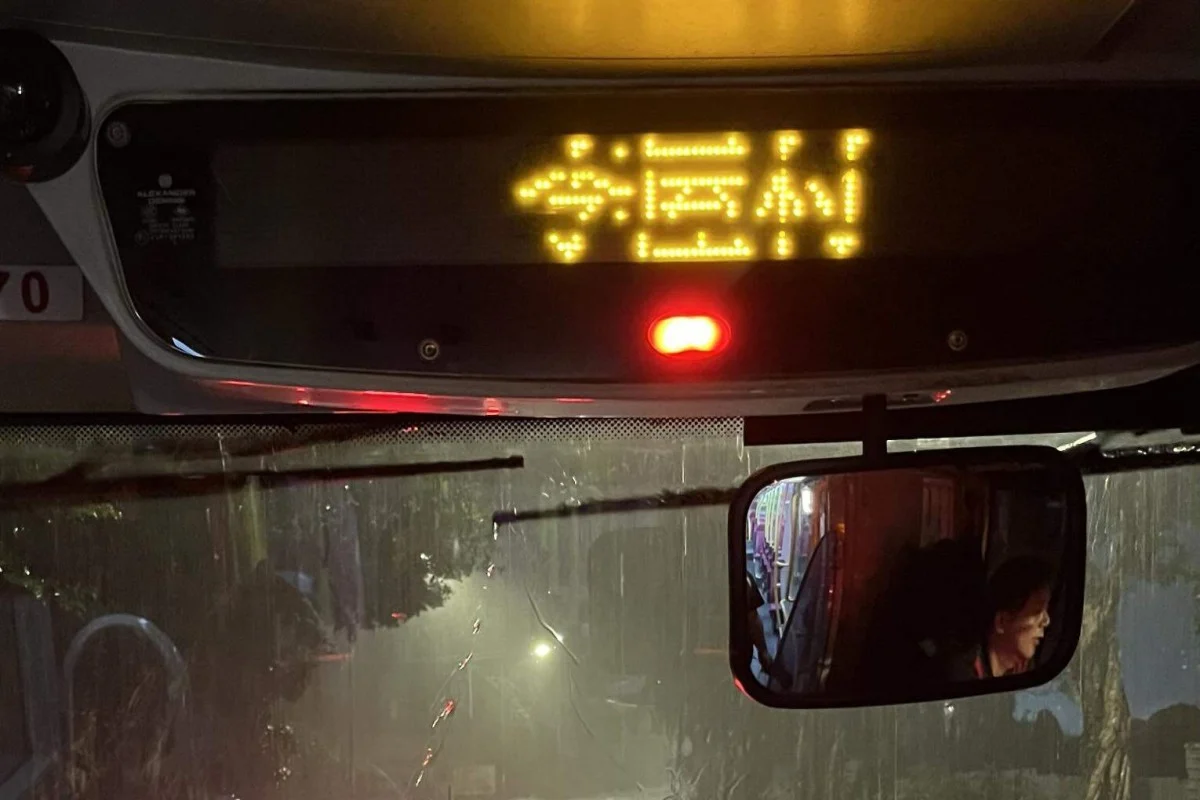
Hundreds of parents in Hong Kong have expressed anger after a sudden change in the city’s rainstorm warning system left children traveling to school during heavy downpours and flooded streets.
The controversy began early Thursday when the Hong Kong Observatory issued a red rainstorm signal at around 2:40 a.m., warning of intense rainfall across the city. The alert was triggered as strong rainbands moved through the region, causing widespread heavy showers and rising water levels in several districts.
Shortly after, authorities also issued a flooding alert for parts of the northern New Territories, where roads and low-lying areas were already affected by water accumulation.
The red rainstorm warning is the highest alert level used in Hong Kong’s weather system and is typically issued when extremely heavy rain is recorded or expected within a short period. Officials use it to warn residents of possible flooding, transport disruption, and safety risks.
However, just a few hours later, at around 5:15 a.m., the warning was downgraded to an amber signal. By 9:30 a.m., it was fully cancelled.
The sudden downgrade created confusion among parents and schools, many of which proceeded with normal school operations once the alert was reduced. As a result, students and families were forced to travel during ongoing heavy rain and difficult road conditions.
Many parents reported that children arrived at schools soaked, with some describing flooded sidewalks, disrupted public transport, and dangerous commuting conditions.
The Hong Kong Observatory’s warning system is designed to help schools and workplaces decide whether to suspend activities during severe weather. A red rainstorm warning usually signals that extreme conditions are present and that outdoor movement should be avoided when possible.
The amber warning, which replaced the red signal in the early morning, indicates less severe rainfall but still warns of heavy showers that may cause localized flooding.
Officials have not yet issued a detailed explanation for the timing of the downgrade, but weather systems in Hong Kong can change rapidly due to the region’s subtropical climate and seasonal monsoon patterns.
Parents, however, argued that the decision created unnecessary risk and confusion. Many said schools should have remained closed until conditions fully stabilized, especially given the early morning timing of the downgrade.
The incident has sparked broader discussion about how weather alerts are communicated and how quickly institutions should respond to changing conditions.
Meteorologists note that Hong Kong’s rainstorm warning system is one of the most frequently used in the world due to the city’s exposure to intense summer rainfall and typhoon-related weather patterns.
The system is designed to balance public safety with maintaining daily life in a densely populated urban environment, where sudden closures can affect transportation, business operations, and education schedules.
Despite this, critics say the latest incident highlights gaps in decision-making during fast-changing weather events.
Some parents also pointed to transportation difficulties during the morning rush hour, with reports of delayed buses, waterlogged streets, and congested roads across multiple districts.
The Hong Kong Observatory has not yet responded to public criticism, but officials typically review weather events after major public reactions or disruptions.
The region is currently in its rainy season, when sudden and intense downpours are common. Meteorologists warn that climate patterns in the region may continue to produce unpredictable rainfall events in the coming weeks.
For many families, the experience has renewed calls for clearer guidelines on school closures during severe weather warnings and faster coordination between weather authorities and education officials.
As Hong Kong continues to deal with frequent heavy rain events, the balance between public safety and daily operations remains a recurring challenge for city planners and weather authorities.
