

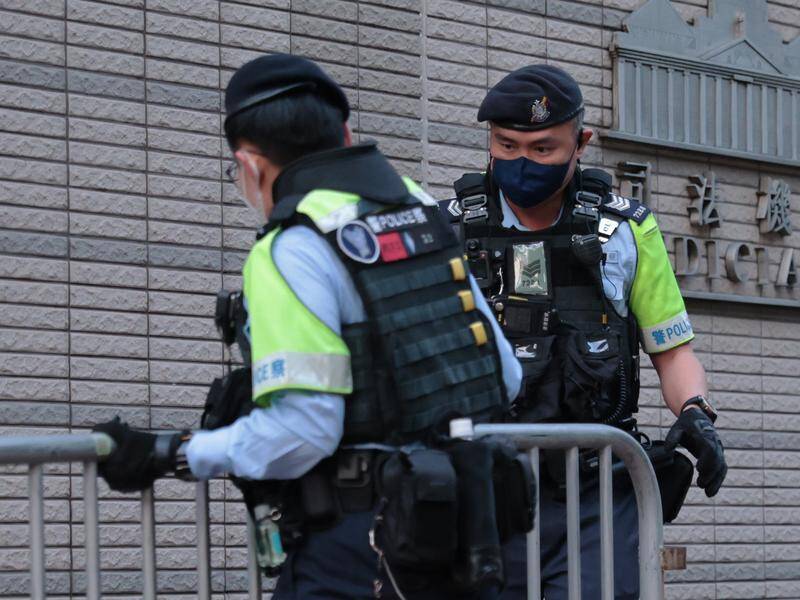
Hong Kong’s national security law has been amended, granting police extensive new powers to demand mobile phone and computer passwords from individuals suspected of breaching the legislation. Refusal to comply could result in up to a year in jail and a HK$100,000 fine, while providing false or misleading information carries a potential three-year prison sentence and a HK$500,000 fine. These sweeping changes also empower customs officers to seize items deemed to have “seditious intention,” even without an arrest related to national security. The amendments, published by the city government, leverage existing powers to bypass the local legislature, raising significant concerns about individual rights and privacy.
The original national security law, imposed by Beijing in 2020, has been a source of significant international criticism since its inception. It punishes acts such as subversion, secession, terrorism, and collusion with foreign forces, with penalties extending to life imprisonment. Beijing and Hong Kong officials have consistently argued that the law was essential to restore stability following the widespread pro-democracy protests that gripped the city in 2019. However, critics, particularly Western governments and human rights organizations, view it as a tool to suppress dissent and erode the city’s promised freedoms and autonomy under the “one country, two systems” framework.
The newly introduced provisions specifically empower law enforcement officers to require any person under investigation for endangering national security to provide passwords, decryption methods for electronic devices, and “any reasonable and necessary information or assistance.” Urania Chiu, a UK-based law lecturer researching Hong Kong, condemned these changes, stating they deeply interfere with fundamental liberties, including the privacy of communication and the right to a fair trial. Chiu emphasized that the broad powers granted to officers, particularly “without any need for judicial authorisation,” are “grossly disproportionate to any legitimate aim the bylaw purports to achieve.”
In response to the growing criticism, a Hong Kong government spokesperson asserted that the amended rules fully conform to the city’s mini-constitution, the Basic Law, and its human rights provisions. The spokesperson maintained that these changes “will not affect the lives of the general public or the normal operation of institutions and organisations.” According to the Security Bureau, 386 people have been arrested for national security crimes to date, with 176 individuals and four companies convicted. High-profile cases, such as the 20-year jail sentence handed to media tycoon Jimmy Lai in February for collusion with foreign forces and sedition, have drawn significant international condemnation, underscoring the severe implications of the evolving legal landscape in Hong Kong.
