

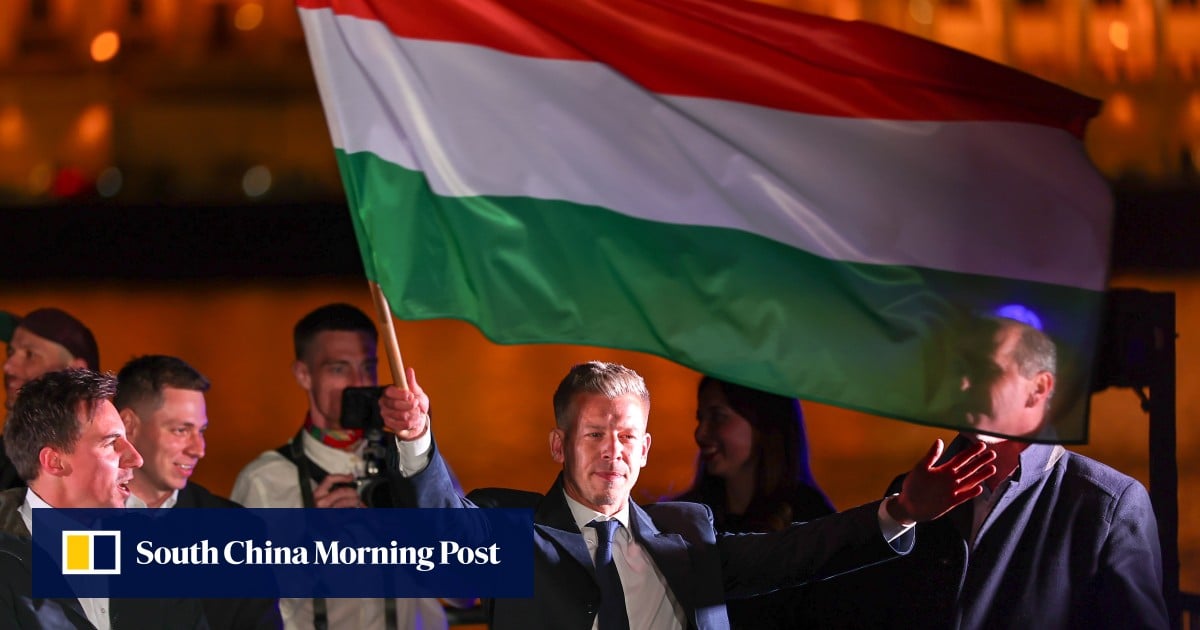
Hungary witnessed a seismic political shift this Sunday, as Prime Minister Viktor Orban’s 16-year tenure concluded with a stunning election defeat. The centre-right Tisza Party, spearheaded by Peter Magyar, secured a landslide parliamentary victory, paving the way for Magyar to become Hungary’s next prime minister. Projections indicate his party will achieve a formidable two-thirds supermajority in the 199-seat Hungarian parliament, marking a decisive turning point in the nation’s political landscape. Orban’s Fidesz Party saw its support collapse, plummeting to just 55 seats from its previous 135, signaling a clear mandate for change from the Hungarian electorate.
Beijing, however, is reportedly unfazed by the dramatic political transition in Budapest, according to Chinese analysts. China’s substantial and long-standing investments in Hungary underpin a bilateral relationship characterized by mutual benefit, transcending specific political administrations. Experts suggest that the foundation of cooperation, built on economic ties and shared interests, is robust enough to withstand changes in leadership. Renmin University’s Wang Yiwei noted that Orban’s defeat was not entirely unexpected within academic circles, suggesting a prepared stance from China regarding potential shifts in Hungarian politics.
The expectation from Chinese experts is that Hungary’s stunning political transition will not trigger a dramatic overturning of its deep-rooted ties with China. The cooperative framework, particularly in economic sectors, has been cultivated over many years and is perceived as fundamentally sound. Both nations have invested significantly in developing strategic partnerships, ranging from infrastructure projects to manufacturing investments, which are considered too valuable to be easily disrupted by a change in government. This pragmatic view emphasizes the enduring nature of state-to-state relations over individual leaders, especially when underpinned by substantial economic commitments.
Furthermore, the broader landscape of China-EU relations is also expected to see limited impact from this Hungarian election outcome. While Orban’s government was often seen as a key proponent of closer ties with China within the EU, Beijing’s strategy involves engaging with the entire bloc and individual member states based on their own sovereign interests. The shift in Hungary’s leadership is unlikely to fundamentally alter the dynamics of the wider China-EU relationship, which is driven by a complex interplay of economic, political, and strategic factors. Chinese experts reiterate confidence that mutually beneficial cooperation will continue to be prioritized, ensuring stability in relations with Hungary and the wider European Union.
