

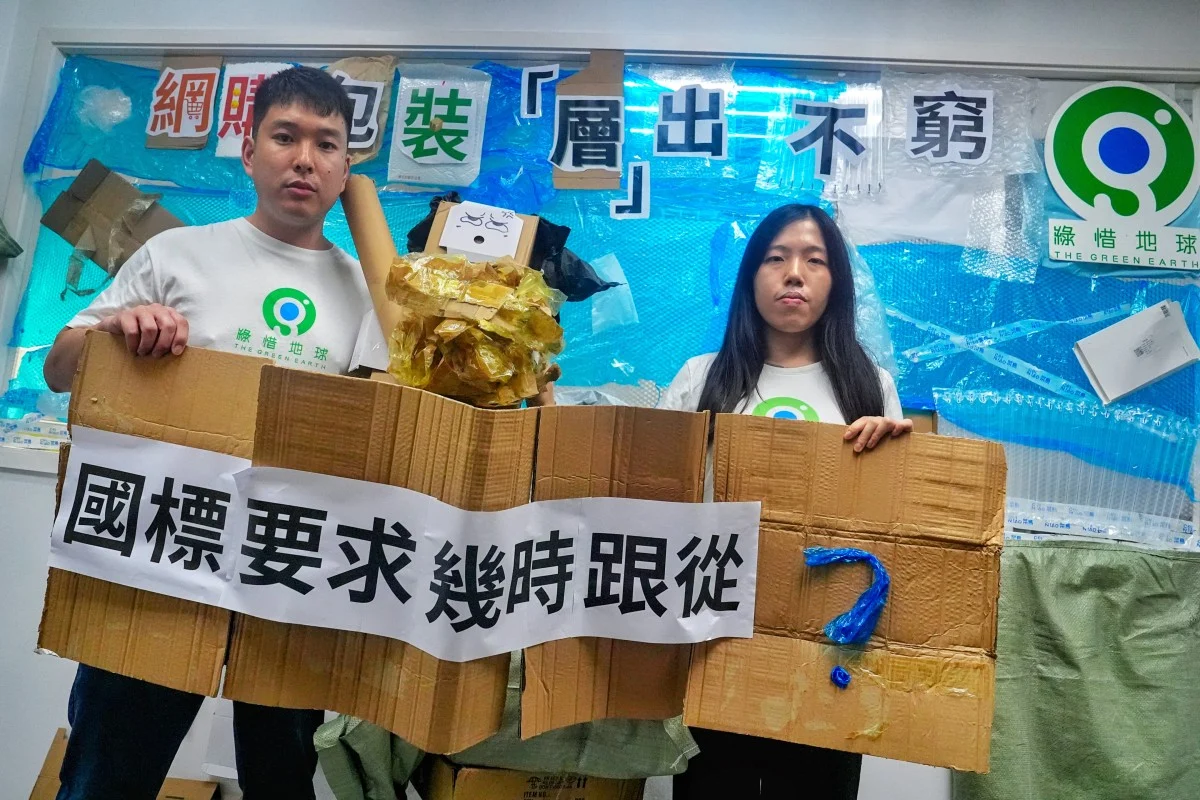
Hong Kong packaging waste has become a growing environmental concern after a leading green group urged the city to strengthen rules on excessive e-commerce packaging. The appeal comes as new data shows that millions of kilograms of parcel waste were generated in Hong Kong last year, raising alarms about sustainability and consumer habits.
A report from local non-profit organisation The Green Earth estimates that at least 2.7 million kilograms of waste were produced from online shopping parcels in the city in the past year. This includes cardboard boxes, plastic wrapping, bubble wrap, and other single use packaging materials commonly used in e-commerce deliveries.
The group is calling on Hong Kong to align its packaging standards with upcoming regulations being developed in mainland China. Environmental advocates say closer alignment could help reduce unnecessary packaging at source and improve waste management efficiency across cross border supply chains.
The Green Earth said excessive packaging remains a widespread issue in the city’s fast growing online shopping market. A recent survey conducted by the organisation found that around 60 percent of respondents believe parcel packaging is too excessive. In addition, 76 percent said they feel frustrated when dealing with the waste after opening deliveries.
Environmental experts warn that packaging waste from e-commerce is increasing alongside the rise in online retail activity. More consumers are ordering goods online, leading to higher volumes of deliveries and more disposable packaging materials entering the waste stream.
Steven Chan Wing kit, assistant environmental affairs manager at The Green Earth, said mainland China’s regulatory reach mainly covers consolidation warehouses just across the border. He noted that without stronger local action in Hong Kong, much of the packaging waste problem cannot be effectively addressed at the city level.
He added that improving packaging standards and encouraging businesses to reduce unnecessary materials could significantly lower the environmental impact of e-commerce. This includes using recyclable materials, reducing double packaging, and promoting reusable delivery systems where possible.
Hong Kong already faces long term challenges in managing municipal waste due to limited landfill space and high population density. Environmental groups argue that reducing packaging waste at the source is one of the most effective ways to ease pressure on waste disposal systems.
The survey also highlights growing public awareness of environmental issues linked to online shopping. Many respondents expressed support for stronger regulation of packaging practices, suggesting that consumers are increasingly willing to accept minimal packaging if it reduces waste.
Experts say the issue reflects a broader global trend, where rapid growth in e-commerce is outpacing efforts to implement sustainable packaging solutions. Without intervention, packaging waste is expected to continue rising in line with online retail expansion.
Environmental advocates are urging both policymakers and businesses to take joint action. They recommend setting clear packaging reduction targets, improving recycling systems, and encouraging companies to adopt eco friendly design standards.
The Green Earth said public education is also important in reducing waste. Consumers can play a role by choosing minimal packaging options where available and supporting businesses that use sustainable materials.
As Hong Kong continues to expand its digital economy, environmental groups warn that waste management systems must evolve at the same pace. They say stronger regulation and cooperation between industry and government will be key to preventing packaging waste from becoming a larger environmental burden.
