

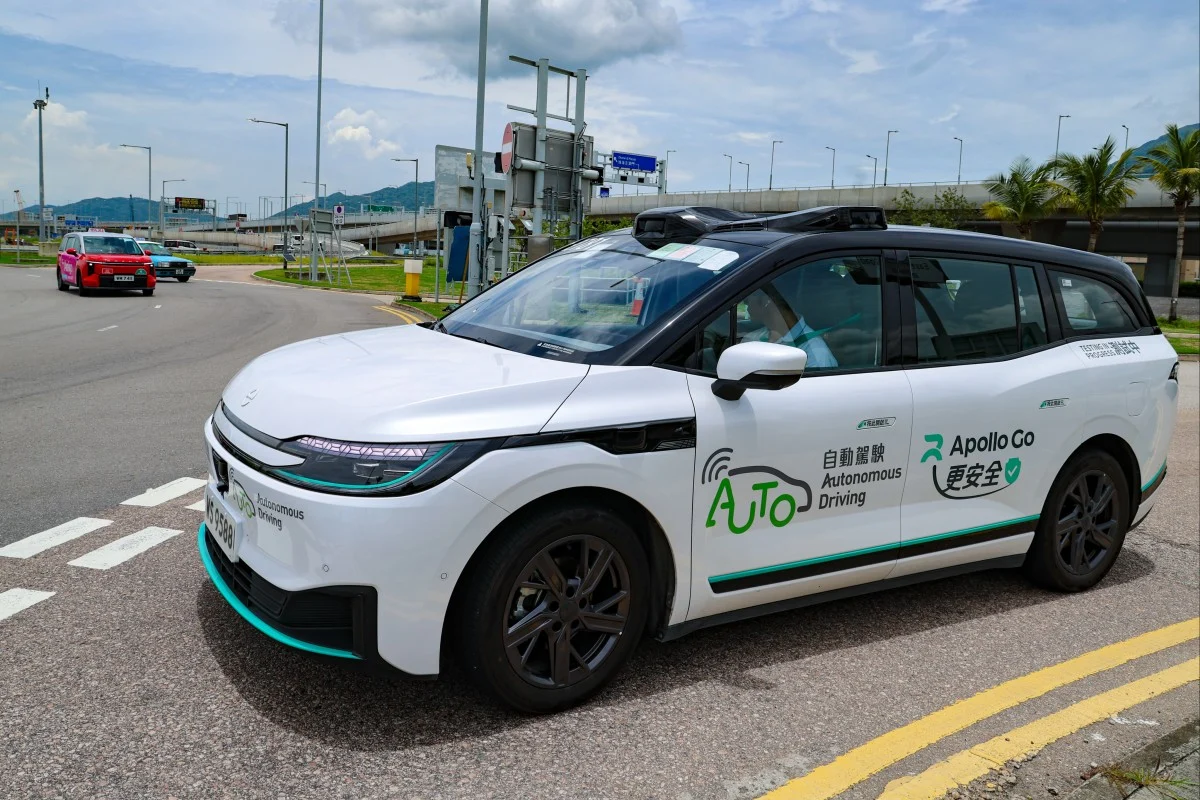
Hong Kong is expanding its autonomous vehicle testing program as officials prepare to allow more roads for driverless vehicle trials. The move comes as Baidu advances testing of its robotaxi service and plans to transition to fully remote-controlled operations in the city.
Government officials said the expanded testing program is part of Hong Kong’s effort to support the development of smart transportation and new mobility technologies. By opening additional roads for trials, authorities hope to encourage innovation while maintaining strict safety standards.
On Monday, Baidu demonstrated its sixth-generation autonomous vehicle under its Apollo Go platform on Lantau Island. The driverless vehicle completed a seven-minute route without direct human control for most of the journey. However, a manual takeover was required after the vehicle left the approved geo-fenced testing area.
The demonstration highlighted the progress of Baidu’s autonomous driving technology while also showing the current safety measures that remain in place during testing. Geo-fenced zones limit where autonomous vehicles can operate and help ensure that testing takes place in carefully monitored environments.
Officials said future testing will gradually expand as companies demonstrate that their systems meet safety and operational requirements. Each stage of the testing process is reviewed before new permissions are granted.
Derek Chung Cheuk-ming, chief electrical and mechanical engineer for autonomous driving and bus technology at Hong Kong’s Transport Department, said the government had issued seven pilot licences covering 63 autonomous vehicles by the end of June this year.
The licensed vehicles are being tested under different operating conditions to evaluate their ability to navigate city streets, respond to traffic, and safely interact with other road users. Authorities continue to monitor each project closely to ensure compliance with local regulations.
Baidu’s Apollo Go platform is one of China’s best-known autonomous driving programs. The company has already introduced robotaxi services in several mainland Chinese cities and continues to improve its self-driving technology through real-world testing.
The latest vehicle demonstrated in Hong Kong represents Baidu’s sixth generation of autonomous technology. The company aims to increase automation by allowing remote operators to supervise vehicles instead of placing safety drivers inside every car during future testing phases.
Hong Kong officials said autonomous vehicles have the potential to improve transportation efficiency, reduce traffic congestion, and support future smart city development. However, authorities stressed that public safety remains the highest priority as testing expands.
Before wider public deployment becomes possible, autonomous vehicles must complete extensive testing under different road and weather conditions. Regulators will continue evaluating vehicle performance, emergency response systems, and communication technology before approving larger-scale operations.
Technology experts believe Hong Kong’s decision to expand autonomous vehicle trials could strengthen the city’s position as a regional center for transportation innovation. The collaboration between government agencies and technology companies may also help accelerate research into safer and more efficient driverless transport.
The expanded testing program reflects growing global interest in autonomous mobility. Many cities are investing in driverless vehicle research as companies develop technologies that could transform public transportation, ride-hailing services, and urban travel over the coming years.
As Hong Kong opens more roads for autonomous vehicle trials, officials say they will continue balancing innovation with public safety. The ongoing partnership with Baidu and other technology developers is expected to provide valuable data that will shape future transportation policies and support the safe introduction of autonomous vehicles across the city.
