

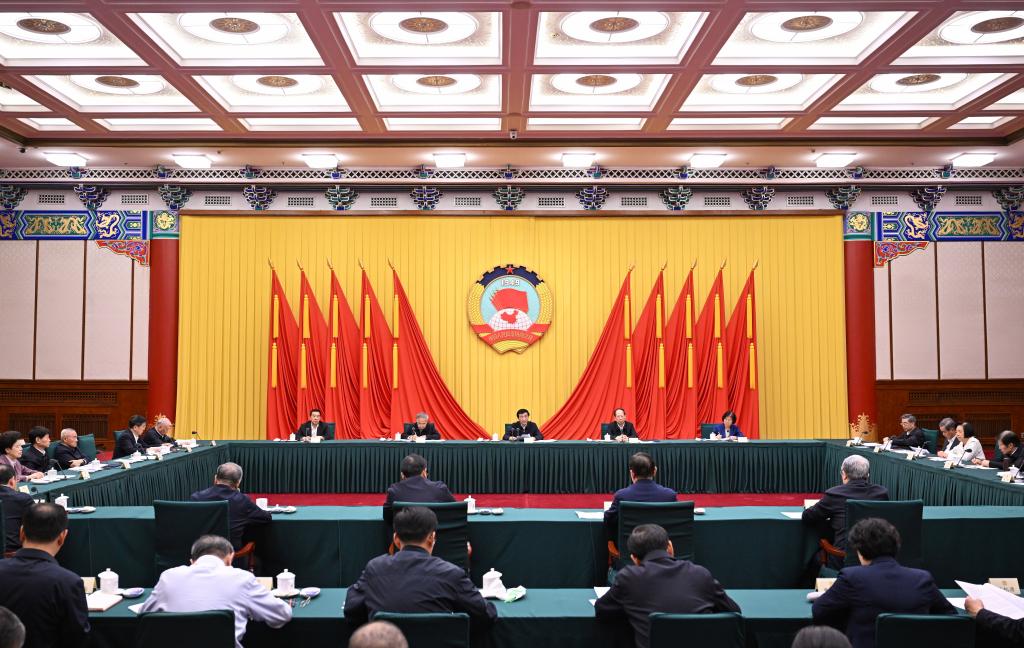
CPPCC leadership meeting China was held on Friday as the country’s top political advisory body gathered for its 50th Chairperson’s Council meeting. The session focused on long-term national priorities, including economic planning, environmental protection, and cross-strait relations.
The meeting belongs to the 14th National Committee of the Chinese People’s Political Consultative Conference, which plays an advisory role in China’s political system. It brings together senior political figures, experts, and representatives from different sectors to discuss national policy direction.
The meeting was chaired by Wang Huning, a senior member of the Communist Party of China’s Central Committee and chairman of the CPPCC National Committee. He also delivered remarks outlining key priorities for the advisory body.
During the CPPCC leadership meeting China, Wang called for stronger consultation work related to the country’s upcoming development goals. He emphasized the importance of preparing for the 15th Five-Year Plan period, which runs from 2026 to 2030.
He urged members to increase research, policy discussions, and thematic studies focused on the development of the service sector. He also encouraged the submission of practical and constructive policy suggestions to support national planning.
The meeting highlighted the importance of structured research into key national issues. One major focus was ecological conservation. Wang called for deeper investigation into environmental protection challenges and better coordination of related educational programs.
He stressed that environmental protection efforts should be strengthened through public awareness and organized activities. These initiatives aim to improve ecosystem protection and support long-term sustainability goals.
Another key topic during the CPPCC leadership meeting China was the development of policies related to Taiwan. Wang reaffirmed the importance of implementing the Communist Party’s overall policy approach on the Taiwan question in the new era.
He emphasized the CPPCC’s role as an inclusive platform within the patriotic united front system. According to Wang, the organization should help build broader public support for national unity and peaceful development of cross-strait relations.
The meeting also discussed efforts to strengthen consensus-building among different social and political groups. The CPPCC is designed to bring together diverse voices and promote consultation-based governance within China’s political structure.
Officials said the advisory body should continue to play a key role in gathering opinions and offering policy suggestions to national leadership. This includes work on economic reform, environmental protection, and long-term strategic planning.
The CPPCC leadership meeting China also set internal organizational plans. It was decided that the 17th session of the Standing Committee of the 14th CPPCC National Committee will take place in late June.
The CPPCC operates as an important part of China’s political consultation system. While it does not have legislative power, it provides advice and recommendations to government bodies and the Communist Party leadership.
Wang’s remarks reflected a focus on long-term national development goals. The emphasis on the service sector, environmental protection, and social unity aligns with broader planning for China’s next five-year development cycle.
The meeting also reflects ongoing efforts to strengthen policy coordination across different regions and sectors. By promoting research and consultation, the CPPCC aims to support decision-making at the national level.
As China prepares for the 15th Five-Year Plan period, advisory bodies like the CPPCC are expected to play a more active role in shaping policy discussions. The focus remains on combining economic growth with environmental sustainability and political stability.
The CPPCC leadership meeting China highlights how the country continues to rely on structured consultation processes to guide long-term planning. The outcomes of these discussions are expected to influence policy direction in the years ahead.
