

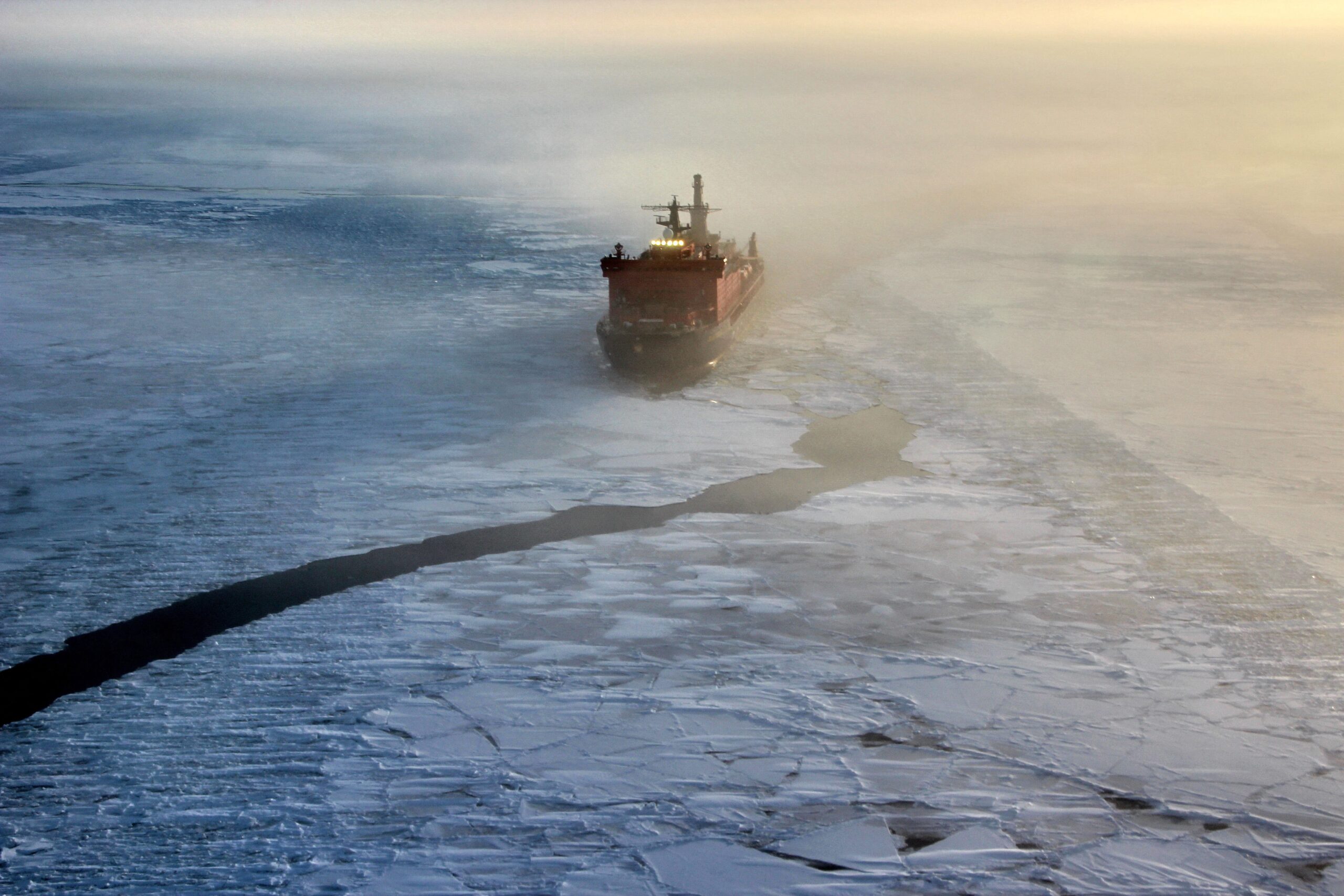
China has officially launched the first scheduled container service through the Arctic Ocean. The massive ocean transit cuts shipping times to Europe by more than half. The new path gives global trade a fast alternative to crowded ocean channels.
A Chinese shipping firm named Sea Legend leads the bold venture. The company now runs regular cargo ships across the northern seas. Ships travel directly from Ningbo to the United Kingdom in just 18 days. Traditional routes through the Suez Canal often take over 40 days to complete.
The high-north sea lane spans 5,500 kilometers along the frozen coast of Russia. Powerful nuclear icebreakers clear the path through thick polar ice blocks. Summer sunlight shines all day and night to keep ships moving safely.
Rising global temperatures have melted large sections of sea ice in recent years. This environmental change opens a wider time window for commercial ships to cross the cold waters. The warm season gives ocean liners a rare chance to move goods quickly across the globe.
Trade experts say the cold path works best for sensitive cargo types. High-tech items like electric cars, solar panels, and lithium batteries perform better in cool weather. China remains a top global exporter of these high-demand green products.
The shift also brings major changes to global trade politics. Chinese leaders first spoke about building a polar trade path back in 2017. Recent world events have brought Moscow and Beijing much closer together. Russia controls the polar waters and now gives Chinese vessels direct passage.
Russian state operators issue permits and guide vessels safely through the ice. Their nuclear ships break heavy ice blocks to open paths for trade ships. This teamwork gives China a strong foothold in northern waters.
However, the new polar sea path carries deep risks alongside its speed. Severe weather and unexpected ice shifts can create sudden dangers for ships. Help remains very far away if a vessel runs into trouble in remote northern waters.
Environmental groups warn that heavy ship traffic damages fragile polar habitats. Black carbon from engine soot speeds up ice melting on white snow fields. Clean energy ships may take many years to solve this environmental problem.
Political tension also grows as nations watch China expand its reach into cold waters. Other countries like Japan, South Korea, and India now monitor the strategic path closely. Many foreign leaders worry about safety and fair access along the new trade lane.
Sea Legend continues to run its fast ships despite these growing concerns. The successful voyages prove that polar paths can serve as real alternatives for international trade. Future months will show if the Arctic sea lane becomes a permanent highway for global cargo.
