

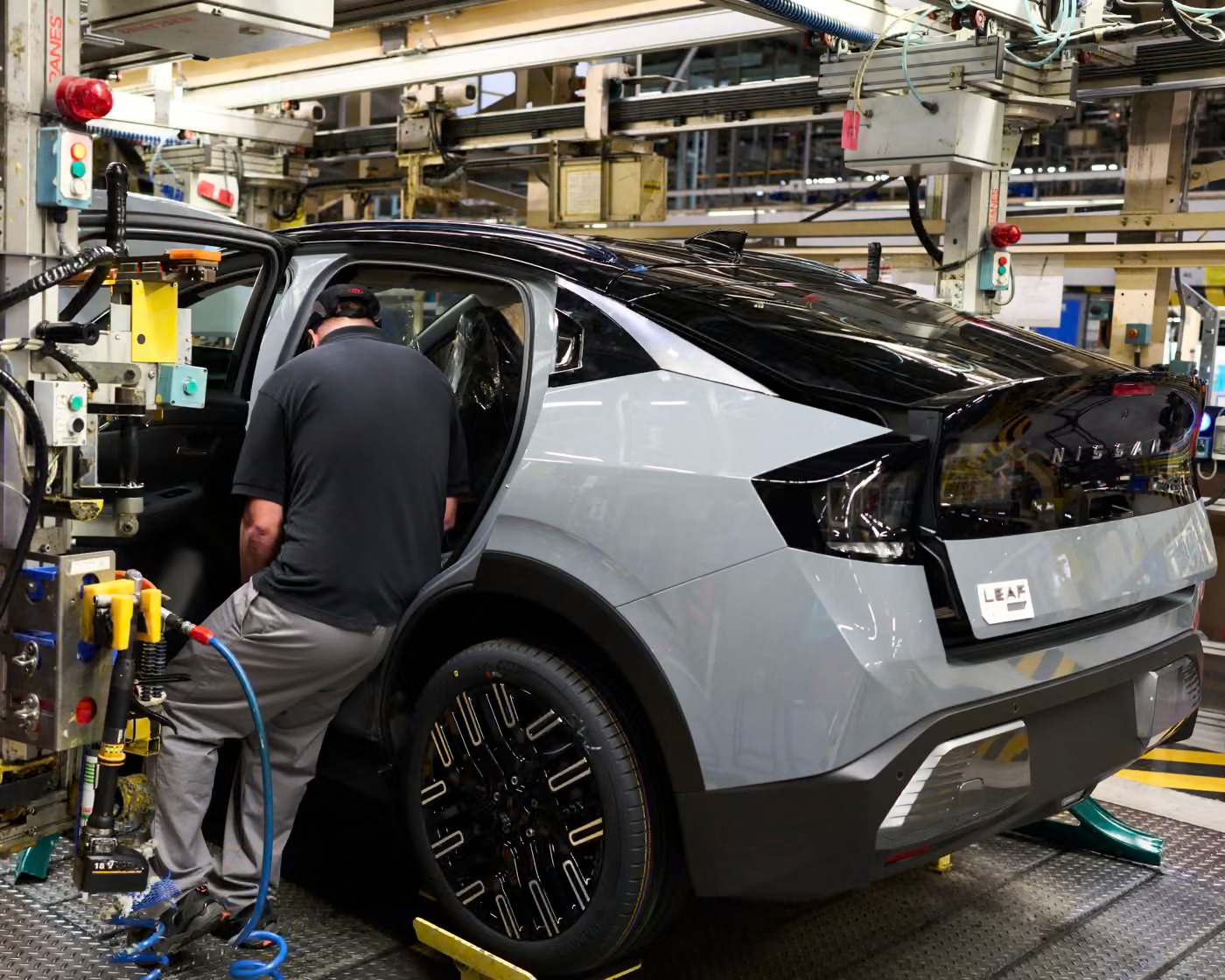
Japanese automaker Nissan is changing its production strategy after underestimating the rapid growth of electric and hybrid vehicle sales in China. The company has lowered its global sales forecast and plans to reduce petrol car production while increasing output of battery-powered and plug-in hybrid models.
The decision comes as competition intensifies in China, the world’s largest automotive market. A severe price war and the rapid expansion of local electric vehicle manufacturers have placed growing pressure on foreign carmakers.
Nissan now expects to sell between 2.97 million and 3 million vehicles this year. This is below its previous forecast of 3.15 million cars. The company said weaker performance in China was the main reason for the reduction.
Nissan Chief Executive Ivan Espinosa described China as the company’s biggest challenge. He said demand had weakened, competition had become stronger and the transition to new energy vehicles was moving faster than expected.
Espinosa also warned that conditions in the Chinese market had become extremely difficult for established manufacturers. Local companies are competing aggressively on prices while introducing new electric models at a rapid pace.
Nissan’s performance has been different in other major markets. The company reported stronger sales in Japan and North America, where the transition to electric vehicles has been slower. Government policy changes have also influenced demand, particularly in the United States, where President Donald Trump has rolled back several incentives supporting electric vehicle production and infrastructure.
This difference between markets presents a major challenge for global automakers. Many companies still depend on petrol and diesel vehicles for a large share of their profits. However, continuing to prioritise traditional models risks leaving them behind as Chinese manufacturers expand their presence in the global electric vehicle industry.
China’s electric vehicle sector has grown rapidly with strong government support and subsidies. The country used the opportunity to build a large domestic industry and challenge established carmakers from Japan, Germany and the United States.
The result has been a crowded market with many manufacturers competing for customers. As the number of electric vehicle producers has increased, price competition has become more intense. Companies are now under pressure to lower prices, improve technology and introduce new models more quickly.
Nissan’s sales figures show the scale of the problem. The company reported that its sales in China fell 22% during the first half of the year. The situation became more difficult between July and October, with sales declining 32% during the first nine months of the year.
The company’s existing product range has also contributed to its difficulties. Nissan’s Chinese lineup has been led by the Sylphy family of petrol-powered saloon cars. Espinosa said the range was too closely linked to traditional engines at a time when Chinese consumers were increasingly choosing electric and hybrid vehicles.
To respond, Nissan plans to reduce local production of petrol cars and export some models. At the same time, it wants to increase production of its N series, which includes battery electric vehicles and plug-in hybrids.
Plug-in hybrids combine an electric battery with a petrol engine. They offer drivers the ability to use electric power for shorter journeys while retaining a conventional engine for longer trips.
The strategy reflects Nissan’s attempt to adjust to changing customer preferences in China. However, the company faces the challenge of competing with local manufacturers that have moved quickly to develop new technology and offer lower-priced models.
Nissan’s approach in China also contrasts with its position in Europe. The company has been among the automakers seeking a slower transition to battery-powered vehicles in some European markets.
In the United Kingdom, Nissan has lobbied for changes to the zero-emission vehicle mandate, which sets targets for increasing electric vehicle sales. It has also supported allowing petrol cars to remain on sale beyond 2035.
The position has attracted attention as demand for electric vehicles in the UK continues to grow. Higher petrol and diesel prices following the Iran war have added to consumer interest in electric alternatives.
Recent figures from the used-car market showed particularly strong growth. Ian Plummer, chief customer officer at Autotrader, said retail sales of used electric vehicles increased 56% year on year in October. Electric models accounted for one in every 10 retail sales on the platform.
The figures suggest that demand for electric cars is expanding beyond the new vehicle market, creating further pressure on manufacturers to adapt their product strategies.
Nissan also faces uncertainty over proposed European Union rules designed to support vehicles manufactured within Europe. The company operates its only European factory in Sunderland, northern England.
Espinosa said he hoped vehicles produced at the Sunderland plant and in Japan would qualify under the proposed Made in Europe framework. However, the rules in their current form could exclude Nissan’s vehicles from certain EU subsidies and incentives.
That possibility could create additional difficulties for the company as it tries to compete with manufacturers that have stronger local production links.
Nissan’s latest changes highlight the growing divide between global automotive markets. While demand for petrol vehicles remains important in some regions, China’s rapid shift towards electric and hybrid models is forcing established manufacturers to rethink production, investment and long-term sales plans.
For Nissan, adapting quickly to China’s changing market will be essential to restoring its competitiveness and meeting its revised global sales targets.
