

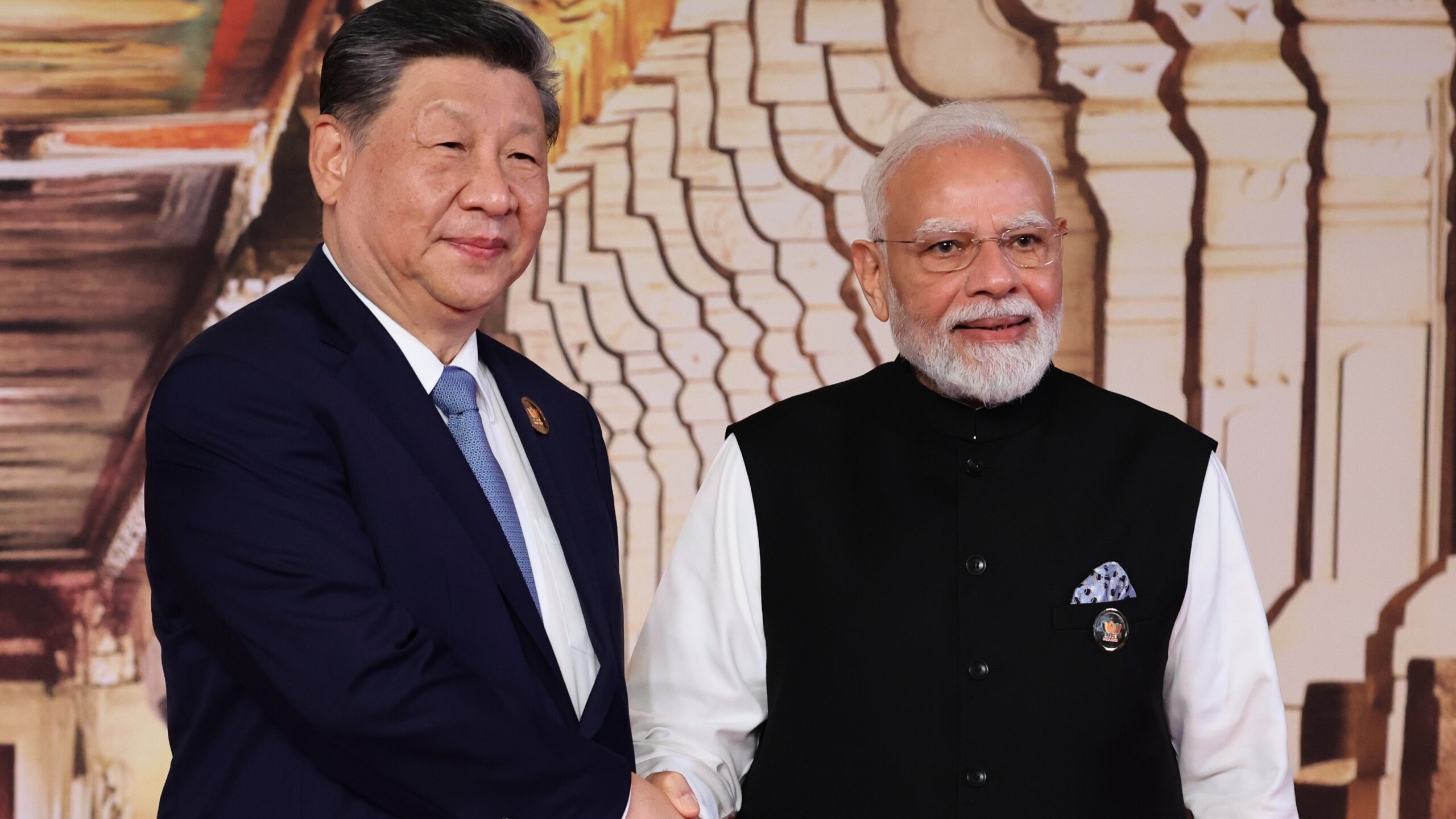
Indian Prime Minister Narendra Modi and Chinese President Xi Jinping held talks on Saturday during the BRICS summit in New Delhi, continuing efforts to stabilize relations between Asia’s two largest nations after years of tension along their disputed border.
The meeting took place on the sidelines of the annual BRICS gathering and marked another step in the gradual improvement of ties between India and China following the deadly border clash in 2020 that significantly damaged relations between the neighboring countries.
During the talks, both leaders emphasized cooperation, dialogue, and the importance of maintaining peace along the border while expanding economic and diplomatic engagement.
According to Chinese state media, Xi said Beijing views its relationship with India from a long-term and strategic perspective. He stressed that the two countries should support one another, strengthen cooperation, and pursue shared development goals.
Xi also called for deeper collaboration between the two nations, describing China and India as important voices of the Global South. He said both countries should work together to promote a more balanced international order and contribute to global peace and stability.
The Chinese president noted that exchanges between institutions in both countries have gradually resumed in recent years. He also highlighted the continued growth of bilateral trade despite political tensions.
Xi described China and India as partners rather than rivals and said both nations should view each other’s development as an opportunity instead of a threat.
His comments reflected Beijing’s effort to present the relationship as one based on cooperation and mutual benefit, even as unresolved disputes continue to challenge ties.
Modi, meanwhile, thanked Xi for China’s cooperation during the BRICS summit process. China is scheduled to host the next BRICS summit, continuing the rotating leadership among member states.
The BRICS group was originally formed by Brazil, Russia, India, China, and South Africa. The bloc has expanded significantly in recent years and now includes several additional emerging economies seeking a stronger role in global affairs.
India’s foreign ministry said Modi emphasized that peace and stability along the disputed border remain essential for improving broader relations between the two countries.
The prime minister urged both sides to respect existing agreements designed to maintain calm in border regions and prevent future confrontations.
According to the Indian government, the two leaders reaffirmed their commitment to achieving a fair, reasonable, and mutually acceptable solution to the long-running boundary dispute.
The border issue remains the most sensitive challenge in India-China relations.
Tensions reached a high point in 2020 when clashes between troops in the Himalayan region resulted in casualties on both sides. The confrontation triggered a sharp deterioration in diplomatic and military relations and led to increased military deployments along parts of the border.
Since then, officials from both countries have held multiple rounds of military and diplomatic talks aimed at reducing tensions and preventing further incidents.
Although significant progress has been made in some areas, the broader boundary dispute remains unresolved.
Despite those challenges, trade between the two countries has continued to expand. China remains one of India’s largest trading partners, while both governments recognize the economic importance of maintaining stable relations.
The meeting also reflected broader efforts by both countries to cooperate on international issues through forums such as BRICS.
As major emerging economies, India and China often share common positions on global development, trade reform, climate issues, and the role of developing nations in international institutions.
The New Delhi summit provided an opportunity for leaders to discuss those priorities while also addressing bilateral concerns.
Analysts said the meeting demonstrated a continued willingness by both governments to keep communication channels open despite lingering disagreements.
While no major breakthrough was announced, the discussions highlighted the importance both sides place on managing competition through dialogue rather than confrontation.
The talks also underscored the growing role of BRICS as a platform where major powers can engage on both regional and global issues.
As China prepares to host next year’s summit, both countries are expected to continue diplomatic engagement while seeking practical ways to improve relations and maintain stability along one of the world’s most sensitive borders.
