

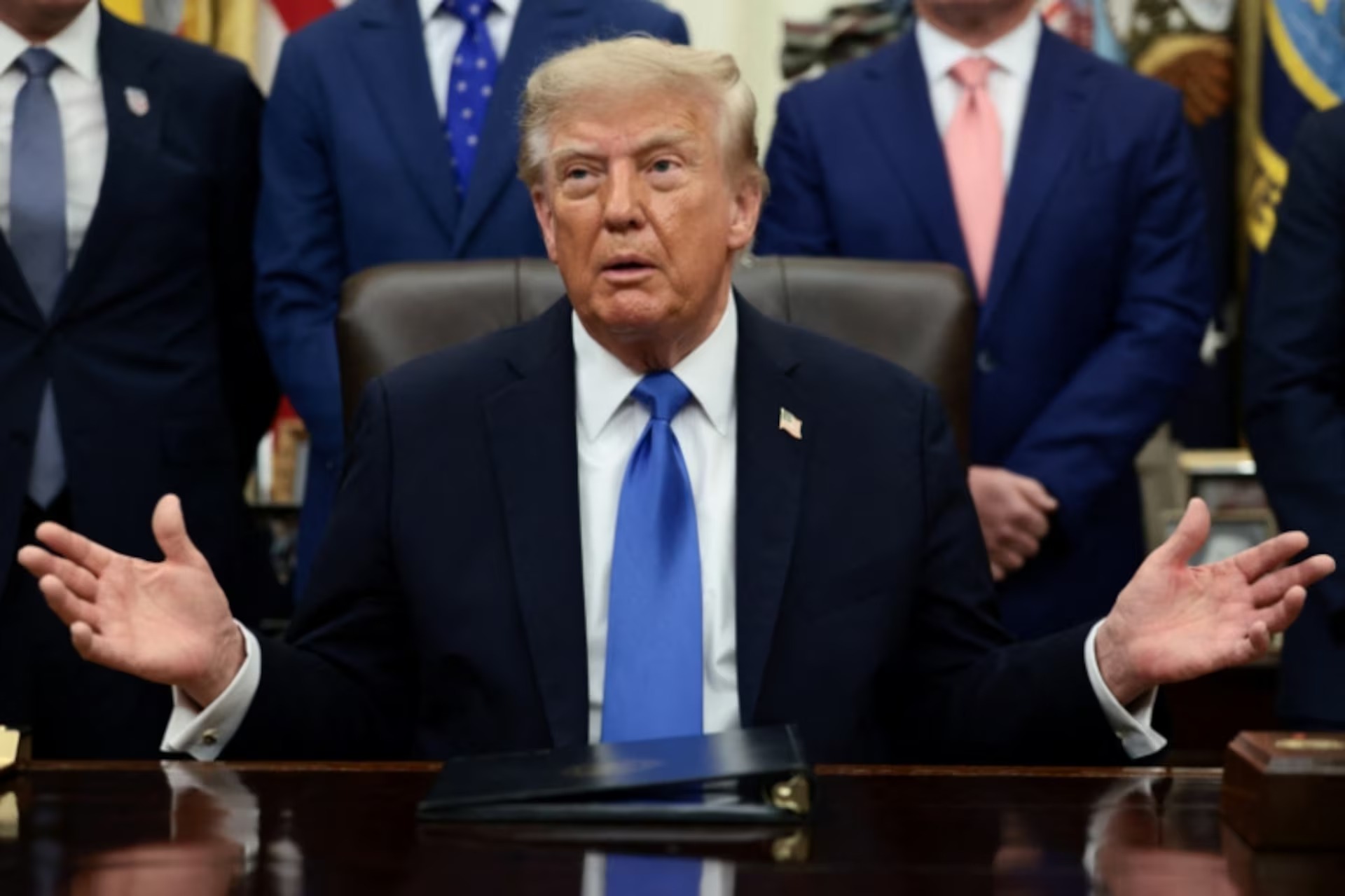
President Donald Trump has sparked fresh debate over the future of the American auto industry after saying he would not oppose Chinese automakers building vehicles in the United States if they create jobs for American workers.
Speaking during a television interview on Friday, Trump said he would be open to Chinese car manufacturers establishing production facilities on US soil. His comments come as policymakers, industry groups, and automakers continue to debate how the United States should handle growing competition from China’s automotive sector.
“If China wanted to come in and open a plant to build their cars here, I’d be okay with that,” Trump said during the interview.
The president pointed to foreign automakers from countries such as Japan that already manufacture vehicles in the United States and employ American workers. He emphasized that job creation would be the key factor in determining whether such investments should be welcomed.
Trump made clear, however, that he opposes Chinese companies producing vehicles in Mexico and then exporting them into the US market. He argued that manufacturing should take place inside the United States if companies want access to American consumers.
“I’m not knocking Chinese cars,” Trump said, while stressing his preference for domestic production and employment.
The comments arrive ahead of a planned meeting between Trump and Chinese President Xi Jinping in Washington later this month. The upcoming talks are expected to cover trade, economic relations, technology, and broader bilateral issues.
Trump’s remarks immediately drew attention because of longstanding concerns about Chinese vehicle imports and the impact they could have on US manufacturers.
American automakers have repeatedly urged the administration to maintain strict barriers against Chinese vehicle producers. Industry leaders argue that Chinese companies benefit from significant government support and could gain an unfair advantage in global markets.
The issue has become increasingly important as Chinese automakers expand internationally and increase exports of electric vehicles and advanced automotive technologies.
Earlier this week, Senator Elissa Slotkin of Michigan raised concerns about reports suggesting the administration could consider broader access for Chinese vehicles as part of future negotiations with Beijing.
Slotkin warned that allowing Chinese-made vehicles into the US market could pose risks to domestic manufacturing and long-term industrial competitiveness.
Trump rejected those claims and described the reports as inaccurate. He said he has consistently worked to keep Chinese vehicles out of the American market and denied that any agreement has been reached.
Current US policy remains highly restrictive toward Chinese automakers.
Regulations introduced in early 2025 effectively prevent Chinese companies from selling or manufacturing passenger vehicles in the United States. In addition, tariffs exceeding 100 percent remain in place on Chinese electric vehicles, making large-scale imports economically difficult.
These measures were introduced over concerns involving national security, supply chains, technology, and competition within the automotive sector.
Industry organizations continue to support strong restrictions. Last week, a major automotive trade group representing most leading manufacturers urged Congress to pass legislation that would permanently block Chinese vehicles from entering the US market.
The organization represents major global automakers operating in the United States, including General Motors, Ford, Toyota, Volkswagen, Hyundai, Honda, and Stellantis.
In a letter to lawmakers, the group’s leadership argued that Chinese manufacturers are rapidly expanding their global presence through heavily subsidized vehicle production and advanced connected technologies.
Supporters of stricter rules say protecting domestic manufacturing remains essential to preserving jobs and maintaining technological leadership. Others argue that allowing foreign companies to build factories in the United States could create employment opportunities and encourage investment.
Trump’s comments have added a new dimension to the discussion by suggesting a distinction between importing Chinese vehicles and producing them domestically through US-based manufacturing facilities.
While no policy changes have been announced, the remarks are likely to fuel further debate among lawmakers, industry executives, and labor groups. As trade negotiations with China continue and competition in the global automotive market intensifies, questions about the future role of Chinese automakers in the United States are expected to remain a major topic in economic and industrial policy discussions.
