

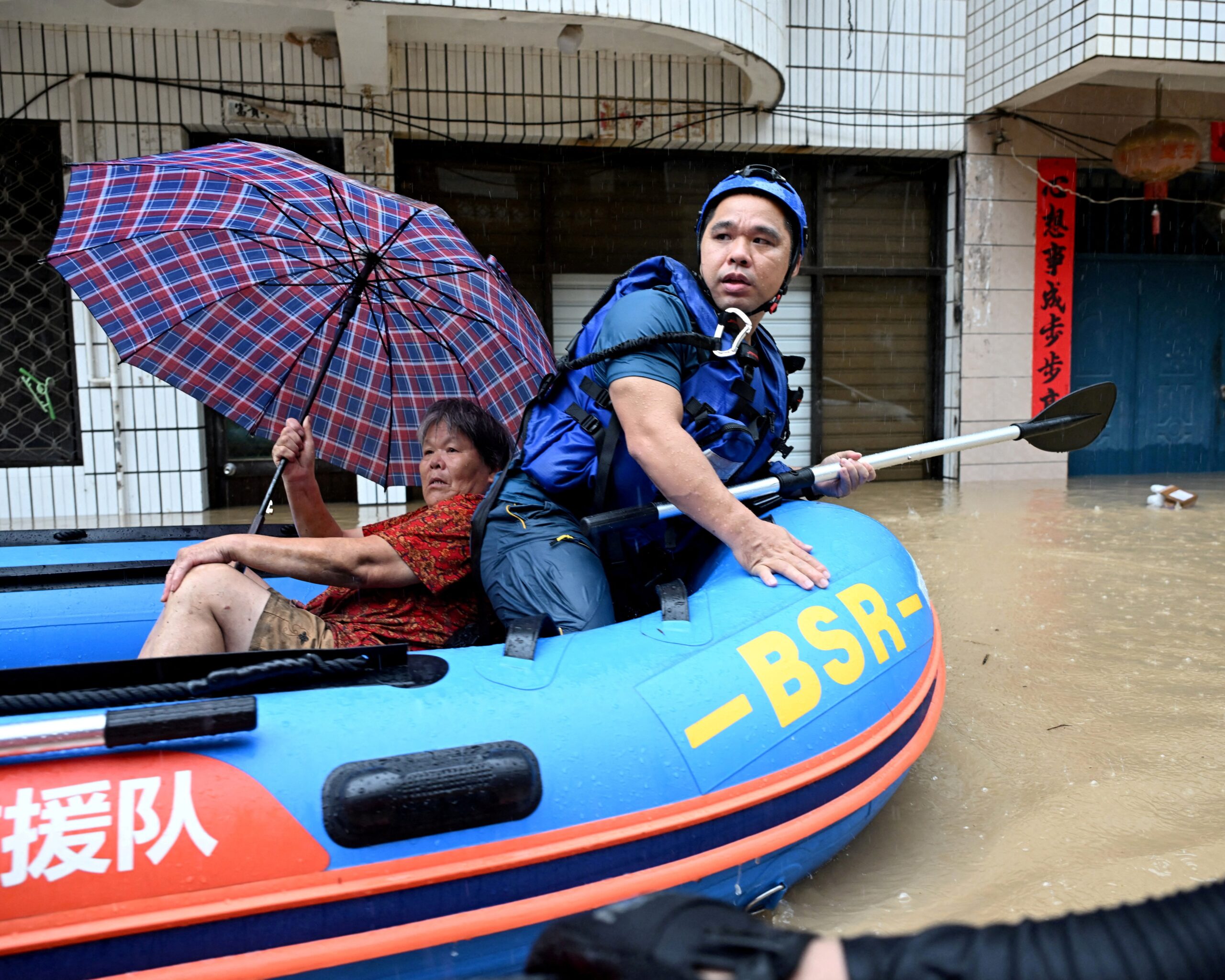
Extreme weather events affected several regions of the world over the past week, bringing deadly floods to China, severe storms to South Africa, and dangerous heat across large areas of the United States.
In China, Typhoon Saudel caused widespread disruption after delivering days of intense rainfall across southeastern provinces. Zhejiang, Jiangxi, Fujian, and Guangdong were among the hardest-hit areas as rivers overflowed, roads were flooded, and landslides damaged communities.
Authorities reported that the city of Putian in Fujian province received more than 416 millimeters of rainfall within a 24-hour period. Some nearby villages recorded more than 500 millimeters during the same timeframe, creating dangerous flooding conditions across the region.
The storm forced large-scale evacuations as local governments moved residents away from areas considered vulnerable to flooding and landslides. Officials estimated that nearly 600,000 people were evacuated from high-risk locations in Fujian alone.
Jiangxi province also faced major impacts from the storm. More than 128,000 people were affected across dozens of counties, while emergency evacuations were carried out for thousands of residents as floodwaters continued to rise.
The heavy rainfall caused extensive damage to infrastructure and disrupted daily life. Roads, bridges, power systems, and public facilities were affected in several communities as emergency teams worked to respond to the crisis.
In Zhejiang province, flash floods trapped more than 2,500 teachers and students inside a school compound in the city of Wenzhou. Rescue teams were deployed after rapidly rising water surrounded the area and blocked access routes.
Putian experienced some of the most severe flooding. Reports indicated that more than 1,200 people required rescue operations after a river embankment failed, allowing floodwaters to surge into residential areas. The flooding damaged or destroyed numerous homes and left communities struggling with the aftermath.
The danger continued beyond flooding. In Suichuan County in Jiangxi province, a landslide struck a village on Saturday, resulting in fatalities and leaving several people unaccounted for. Search and rescue teams continued efforts to locate those missing while monitoring unstable ground conditions.
Typhoon Saudel became the seventh typhoon to affect China this year. The storm arrived only weeks after Typhoon Narra brought heavy rain and flooding to Guangdong, Guangxi, and Hainan, highlighting an active and destructive storm season across southern China.
Meanwhile, South Africa faced a different set of weather challenges. The South African Weather Service issued multiple thunderstorm warnings covering large parts of the northern and western regions of the country.
Forecasters warned of disruptive rainfall, damaging winds, lightning, and hail. Several areas were expected to receive between 75 and 100 millimeters of rain, raising concerns about flash flooding and storm damage.
Strong winds also caused problems in urban areas. In Johannesburg, emergency officials evacuated several families from an apartment building after powerful gusts tore away a significant section of the roof. Authorities moved residents to safety while assessments of structural damage were carried out.
Across the Atlantic, the United States continued to battle an intense late-summer heat wave. High temperatures spread across the central and southern plains as well as the Mississippi Valley, creating dangerous conditions for millions of people.
Daytime temperatures frequently climbed into the upper 30s Celsius, while high humidity levels made conditions feel even hotter. Weather experts reported heat index values ranging between 40 and 43 degrees Celsius in some areas, increasing health risks for outdoor workers, older adults, and vulnerable populations.
The prolonged heat has placed additional strain on energy systems as households and businesses rely heavily on air conditioning. Public health officials have urged residents to stay hydrated, limit outdoor activity during the hottest parts of the day, and check on vulnerable family members and neighbors.
Forecasters expect the extreme heat to continue across parts of the Midwest and southern United States throughout the week. At the same time, recovery efforts remain underway in China and South Africa as communities assess damage and work to restore normal conditions following severe weather events.
Together, the disasters underscore the growing impact of extreme weather around the world and the challenges communities face in responding to increasingly intense natural events.
