

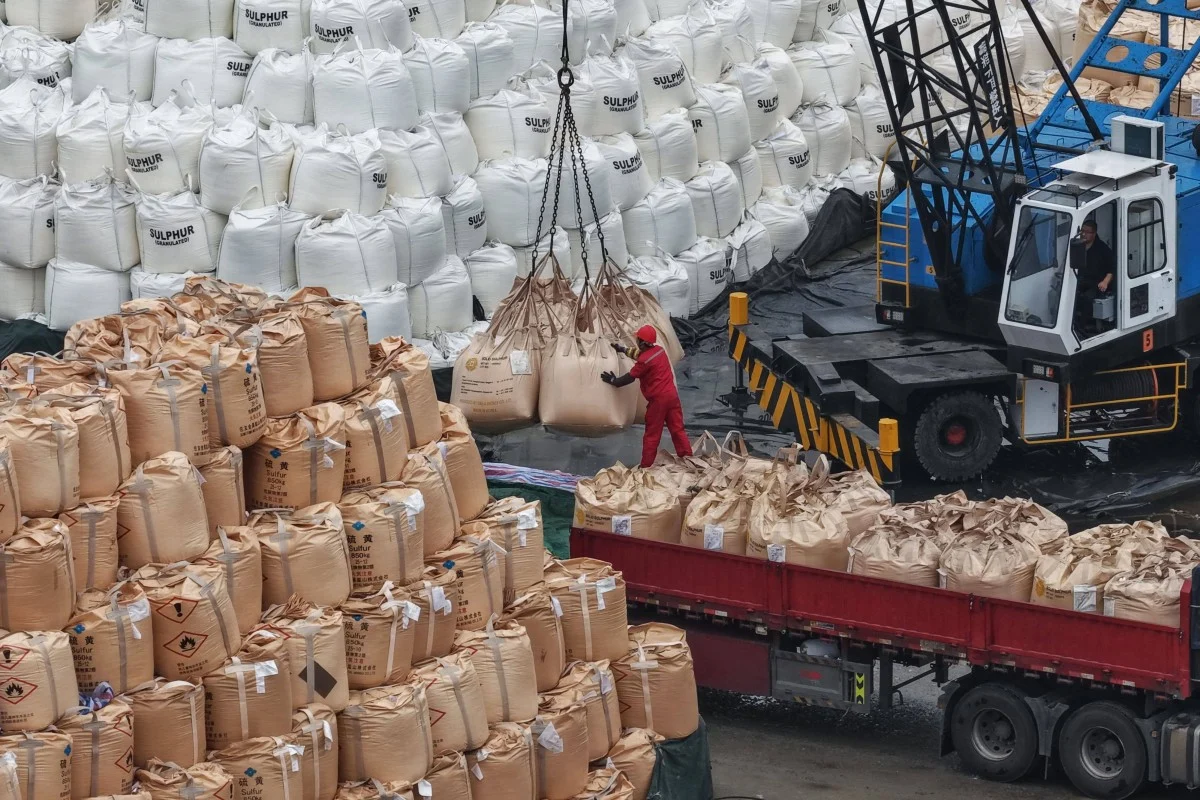
China recorded strong trade performance in April, with exports reaching a new monthly high despite global economic pressure linked to rising geopolitical tensions around the Strait of Hormuz.
According to data released by the General Administration of Customs, China’s exports increased by 14.1 percent year-on-year to 359.44 billion US dollars, marking one of the strongest monthly performances in recent years.
The figure exceeded market expectations and highlighted continued demand for Chinese goods across global markets, even amid higher transport and energy costs caused by instability in key shipping routes.
The Strait of Hormuz, a critical global oil transit route, has faced heightened tensions linked to ongoing conflict involving the United States and Israel in Iran, which has contributed to volatility in energy prices and global logistics.
Despite these pressures, China’s export sector has remained resilient, supported by strong industrial output and steady demand from major trading partners.
Import performance also showed significant growth. China’s imports rose by 25.3 percent in April, reaching 274.62 billion US dollars, driven by higher demand for raw materials and energy products.
This import growth also surpassed market forecasts, indicating stronger domestic consumption and production activity within the Chinese economy.
As a result, China’s trade surplus widened to 84.82 billion US dollars in April, up sharply from 51.1 billion US dollars recorded in March.
Economists say the widening surplus reflects both strong export competitiveness and uneven global recovery patterns, where demand for manufactured goods remains robust compared to some other sectors.
The data also suggests that China’s industrial base continues to benefit from its integration into global supply chains, despite ongoing geopolitical and trade uncertainties.
Higher shipping and energy costs have not significantly slowed export volumes, although analysts warn that sustained disruptions in key maritime routes could eventually affect global trade flows.
The resilience of China’s export sector is particularly notable given broader concerns about global economic slowdown and fluctuating demand in major Western markets.
Manufacturing hubs in China have continued to operate at high capacity, supplying electronics, machinery, consumer goods, and industrial components to international buyers.
At the same time, domestic policy support and infrastructure stability have helped maintain production efficiency across key export regions.
Experts note that while short-term trade figures remain strong, long-term risks include global inflation, supply chain disruptions, and potential escalation of geopolitical tensions.
The Strait of Hormuz remains one of the world’s most strategically important maritime chokepoints, with a significant portion of global oil shipments passing through it daily.
Any sustained disruption in the region is likely to have ripple effects on global shipping costs, energy prices, and trade balances.
For now, however, China’s trade performance indicates that its export-driven sectors are adapting to external pressures while continuing to expand output.
The latest figures reinforce China’s position as one of the world’s largest exporters, with strong manufacturing capacity and broad access to international markets.
Analysts will continue to monitor upcoming trade data to assess whether this momentum can be sustained in the second half of the year amid ongoing global uncertainty.
