

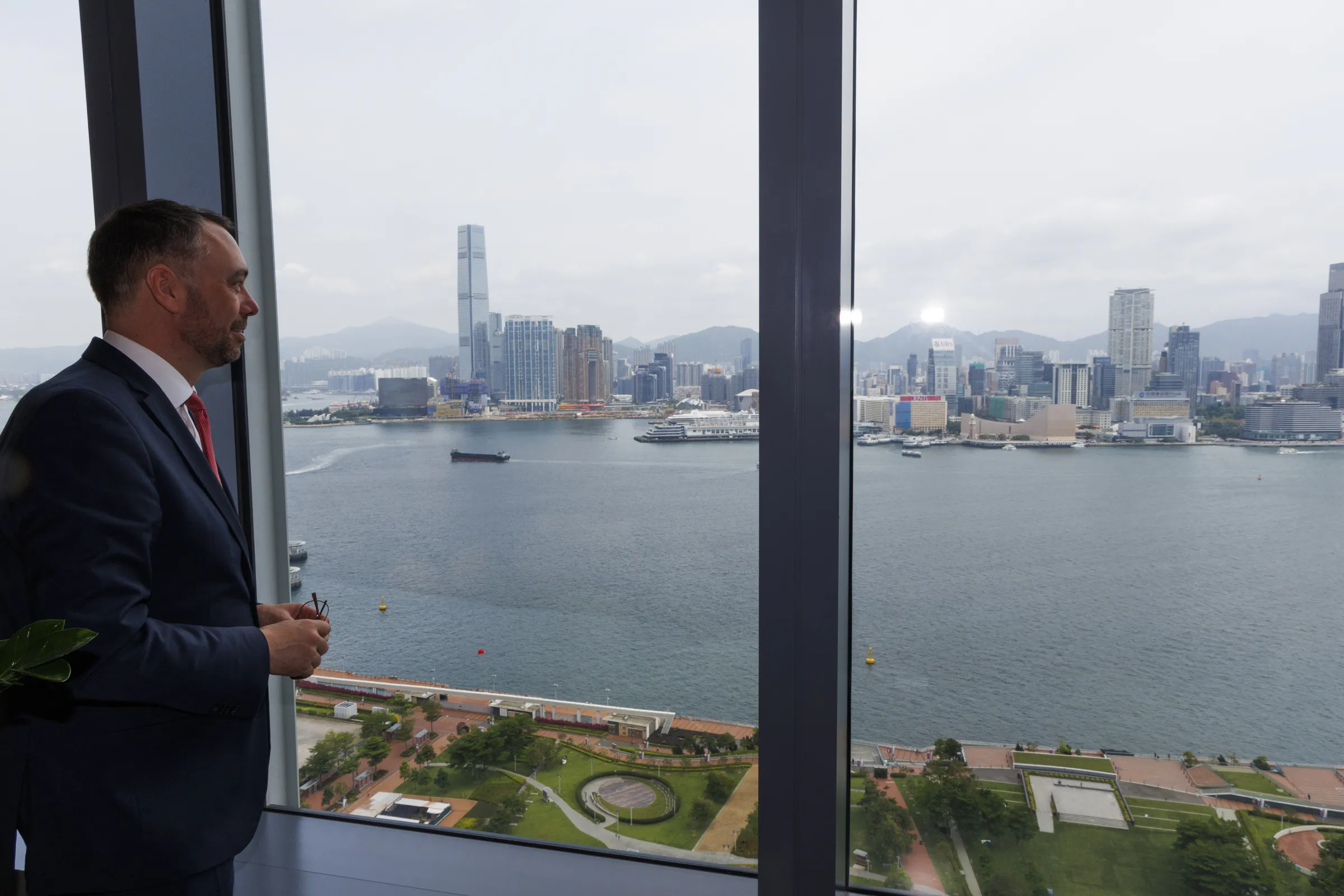
Belgium’s Foreign Minister Maxime Prévot has called for a renewed dialogue between Belgium and Hong Kong during a meeting with Hong Kong Chief Executive John Lee. The meeting took place as part of a wider diplomatic visit focused on economic ties, political relations, and long-term cooperation between Europe and China.
The call for closer engagement comes after several years of strained relations between Hong Kong and Western countries. Tensions increased in 2019 and 2020 following changes to Hong Kong’s electoral system and the introduction of the National Security Law. Many Western governments viewed these changes as a reduction in Hong Kong’s autonomy.
The “one country, two systems” framework was originally designed to give Hong Kong a high level of political independence until 2047. However, European officials and observers say that this system has weakened over time. Critics argue that Hong Kong has moved closer to full integration with mainland China. In response, the European Union reduced its level of engagement with Hong Kong after 2020, although it stopped short of sanctions like those imposed by the United States.
Despite this background, Minister Prévot said it is time to restart structured dialogue. He said both sides should move forward and begin what he described as a “new chapter” in relations. According to him, there is growing understanding within the European Union that engagement remains necessary, even when political differences exist.
During his visit, Prévot held what he described as an open and honest discussion with Hong Kong’s leadership. He said the talks did not avoid sensitive issues such as human rights and personal freedoms. However, he also stressed that relationships can develop even when full agreement is not possible. He said cooperation should be based on practical interests and long-term stability.
Prévot also described Hong Kong as a key gateway to the Chinese market. He highlighted its role in global trade and investment flows. He argued that Europe should develop a clearer and more unified strategy toward China. This position aligns with broader discussions within the European Union about how to manage economic dependence and trade imbalances with Beijing.
The minister’s comments come at a time when European leaders are debating how to balance economic cooperation with political concerns. Some officials believe stronger engagement can protect European interests. Others argue that the EU should take a firmer stance on human rights and political freedoms. Prévot said Europe must find a balanced approach that protects its interests while maintaining communication channels.
As part of his visit, Prévot also toured a major infrastructure project known as the Northern Metropolis. The project covers around 30,000 hectares between Hong Kong and Shenzhen. It is designed to house approximately 2.5 million people and includes large scale urban and technological development plans. The project receives about 13 billion euros in annual investment through public and private partnerships.
Prévot described the project as highly impressive and noted its scale compared to similar developments in Europe. He said the level of investment would be difficult to match in Belgium. He also pointed out that the project connects Hong Kong with Shenzhen, which is known as a major technology hub in China. According to him, such developments show why Europe must carefully plan its long-term approach to China.
He said the rapid growth of integrated city regions in Asia highlights the need for Europe to strengthen its economic strategy. He added that Europe must remain competitive in technology, infrastructure, and global trade if it wants to maintain influence in the international system.
The visit is part of a broader European effort to reassess relations with China and Hong Kong. While some countries prefer cautious engagement, others support rebuilding diplomatic channels. Belgium’s position reflects a growing view that limited dialogue may reduce Europe’s ability to influence developments in the region.
Officials say discussions will continue in the coming days as part of the wider diplomatic mission. The focus will remain on balancing economic cooperation with political values while ensuring that European interests are protected in an evolving global landscape.
