

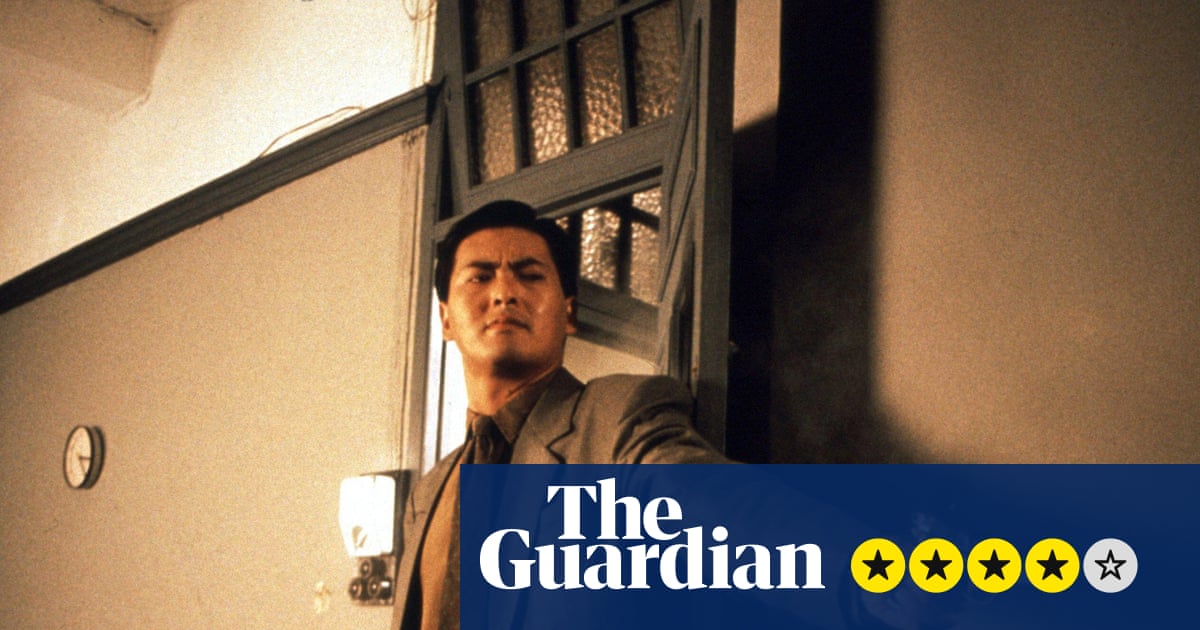
John Woo’s 1989 Hong Kong thriller, *The Killer*, continues to captivate audiences as a seminal work in action cinema, showcasing the director’s unparalleled ability to fuse intense, maximalist violence with profound, almost surreal sentimentality. This enduring touchstone is a potent reminder of Woo’s signature style: orchestrating breathtaking mayhem while anchoring it with a deep streak of earnest emotionalism, a combination that has made his films remarkably addictive. Widely considered a blood-soaked classic, *The Killer* redefined the genre, leaving an indelible mark on filmmakers worldwide and cementing its legacy as more than just an action flick, but a powerful, poignant melodrama wrapped in a hail of gunfire.
At its heart, *The Killer* presents a gonzo melodrama that ingeniously borrows narrative threads from films like *Magnificent Obsession*. It introduces Ah Jong (Chow Yun-fat), a professional assassin whose life takes an unforeseen turn after he inadvertently blinds singer Jennie (Sally Yeh) during a chaotic nightclub hit. Stricken by immense guilt, Ah Jong becomes obsessed with Jennie, forming a connection without revealing his true identity. His resolve to fund an operation to restore her sight leads him to accept one final, high-stakes assassination at a Hong Kong carnival – a spectacular set piece that not only demonstrates Woo’s masterful direction but also subtly foreshadows the cinematic influence he would wield.
The film meticulously builds its complex narrative beyond the central redemption arc. Ah Jong’s attempt to assist an injured child post-carnival hit infuriates his Triad paymaster, leading to a refusal of payment and escalating danger. Simultaneously, tough cop Li Ying (Danny Lee) is hot on Ah Jong’s trail. Li Ying, himself burdened by the accidental death of a civilian he caused, finds an unexpected empathy for the killer, creating a fascinating moral ambiguity. Amidst chaotic, balletic shootouts, Woo injects bizarre stretches of dark comedy, such as the memorable scene where Ah Jong and Li Ying must feign friendship in Jennie’s apartment to protect her from the truth, punctuated by Ah Jong’s melancholic harmonica playing that echoes a lone cowboy’s lament.
*The Killer*’s influence extends far beyond its intricate plot and visceral action, resonating deeply with filmmakers like Quentin Tarantino and Robert Rodriguez. The film’s unique blend of ultra-violence and heartfelt emotionalism, earning Woo the moniker “Douglas Sirk of Hong Kong action cinema,” is a testament to its singular vision. While borrowing thematic elements, *The Killer* ultimately delivers a more pessimistic, yet profoundly human, spectacle than its melodrama predecessors. Its powerful narrative, iconic character dynamics, and relentless action sequences ensure its continued status as a gripping and essential watch, proving that its intricate dance between bullets and bleeding hearts remains as compelling today as it was over three decades ago.
