

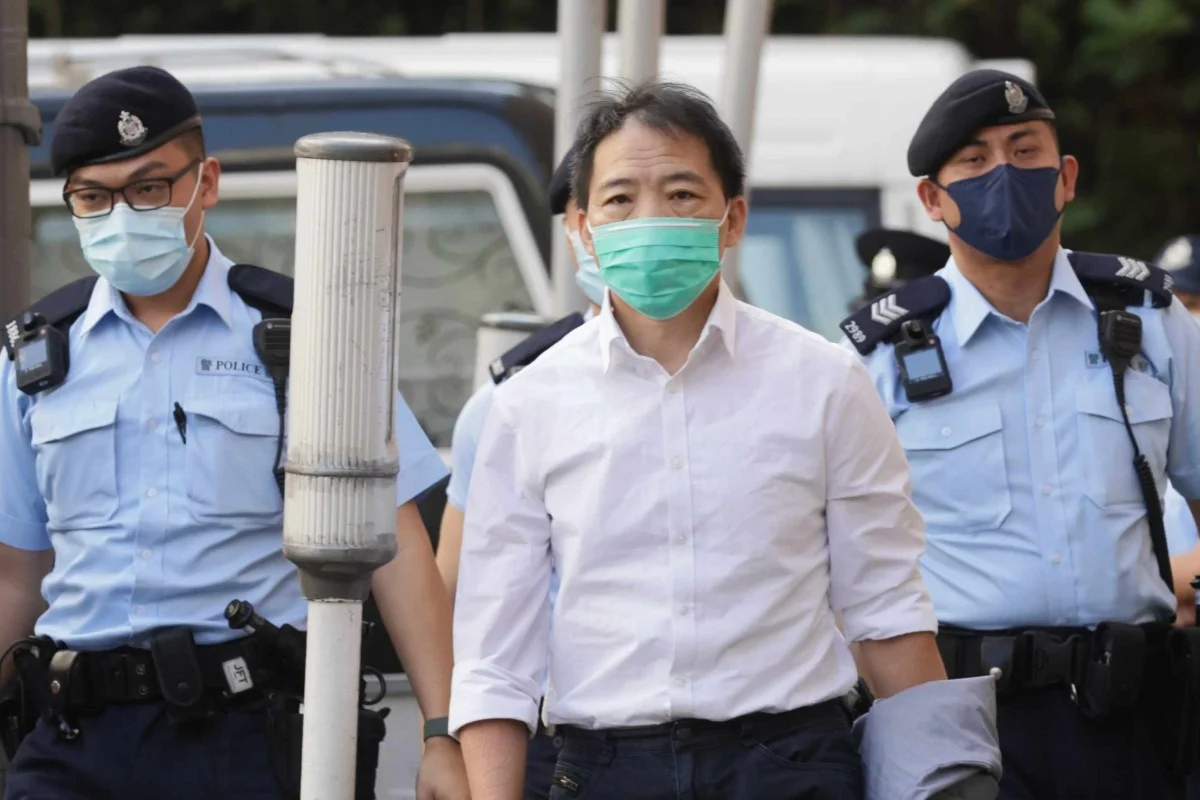
Former Hong Kong lawmaker Wu Chi-wai has been released from prison after completing his sentence in one of the city’s most closely watched national security cases. His release marks another development in the long-running legal proceedings that reshaped Hong Kong’s political landscape.
Wu left Stanley Prison on Tuesday morning after serving his prison term in a landmark subversion case under Hong Kong’s national security framework.
After leaving the correctional facility, Wu entered a waiting seven-seat vehicle that transported him to Fung Tak Estate in the Diamond Hill district. He was carrying two bags of personal belongings when he arrived at the residential area.
Dressed in a white shirt, Wu did not respond to questions from journalists gathered outside. He left the vehicle and entered the estate without making a public statement.
Wu previously served as chairman of the Democratic Party, which for many years was Hong Kong’s largest opposition political party. The party officially dissolved last year after decades of involvement in the city’s political system.
Before his imprisonment, Wu represented constituents in Hong Kong’s legislature and was one of the best-known figures in the city’s pro-democracy political movement. During his political career, he held leadership positions within the Democratic Party and participated in public policy debates on a wide range of issues.
His release follows the completion of the sentence imposed in a landmark subversion case that involved several former opposition politicians and activists. The case became one of the most significant legal proceedings conducted under Hong Kong’s national security legislation.
The national security law was introduced in 2020 and created new criminal offenses related to secession, subversion, terrorism, and foreign collusion. Since its introduction, authorities have used the law in several high-profile investigations and prosecutions involving political figures and activists.
Supporters of the legislation say it has restored stability and strengthened public security following periods of political unrest. Critics, including several international governments and human rights organizations, have expressed concerns about its impact on political freedoms and civil liberties in Hong Kong.
Wu’s release comes as Hong Kong continues to experience significant political changes. In recent years, several opposition parties and civic organizations have either dissolved or sharply reduced their activities amid the changing legal and political environment.
The Democratic Party, once the city’s largest opposition party, formally announced its dissolution last year after decades of political activity. The party had played a prominent role in Hong Kong politics through elections, legislative work, and public advocacy.
Authorities have not announced any special conditions related to Wu’s release beyond the completion of his prison sentence. He has not publicly commented on his future plans or whether he intends to participate in public affairs again.
The release attracted media attention outside Stanley Prison, where journalists gathered early Tuesday morning to document his departure. However, Wu chose not to speak with reporters before leaving the area.
Legal experts note that the national security cases have had a lasting impact on Hong Kong’s political environment, influencing the activities of political parties, civil society groups, and public institutions over recent years.
Observers are expected to continue following developments involving former lawmakers and other individuals released after serving sentences under national security-related convictions.
The Wu Chi Wai Release marks the completion of another sentence connected to Hong Kong’s landmark subversion proceedings. While Wu has returned to private life after leaving prison, his case remains part of a broader period of political and legal change that continues to shape the city’s public and political landscape.
