

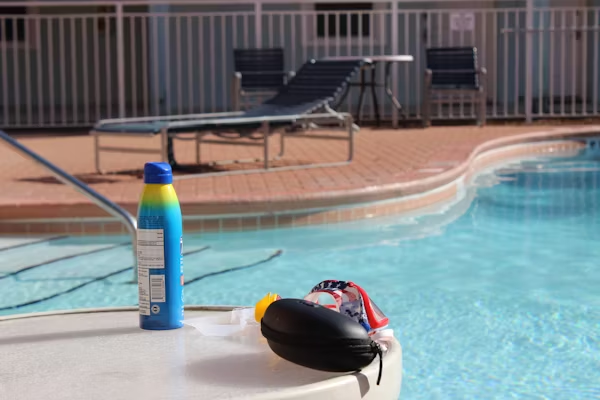
The sunscreen scandal in Australia keeps escalating. Regulators have already taken 18 products off the shelves due to safety concerns.
Popular products fail to meet claims
A consumer advocacy group reported in June that several well-known sunscreens offered far less protection than promised. Ultra Violette’s Lean Screen Skinscreen claimed SPF 50+ but tested at only SPF 4. The company voluntarily recalled the product in August.
Since then, the medicines regulator has identified 20 additional sunscreens from different brands. All share the same base formula, which performed poorly during testing.
Investigations reveal very low SPF levels
Testing showed the formula rarely delivered more than SPF 21. Some products may have provided as little as SPF 4. Out of 21 products named, eight have been recalled or halted. Ten others remain suspended, while two are still under review. One product on the list is produced in Australia but not sold locally.
Rising skin cancer rates heighten alarm
Australia has the highest rate of skin cancer worldwide. Two in three Australians will face at least one cancerous skin removal in their lifetime. This explains the country’s strict sunscreen rules. The scandal has angered the public and sparked global concern. Experts now question both sunscreen production and the accuracy of SPF testing.
Manufacturer suspends formula production
Wild Child Laboratories Pty Ltd, the company behind the base formula, has stopped producing it. Chief executive Tom Curnow said regulators found no problems at its facility. He argued that the discrepancies point to a broader problem across the sunscreen industry.
Testing laboratory under investigation
Regulators have long debated the subjectivity of SPF testing. In their latest update, they raised serious concerns about Princeton Consumer Research Corp, a US-based lab. Many sunscreen companies relied on its testing to prove SPF ratings.
Mr Curnow confirmed Wild Child has ended ties with the US laboratory. He said the company now uses accredited, independent testers. Regulators contacted all firms connected to the disputed formula or the lab. They also wrote to Princeton Consumer Research Corp but have not received a response.
