

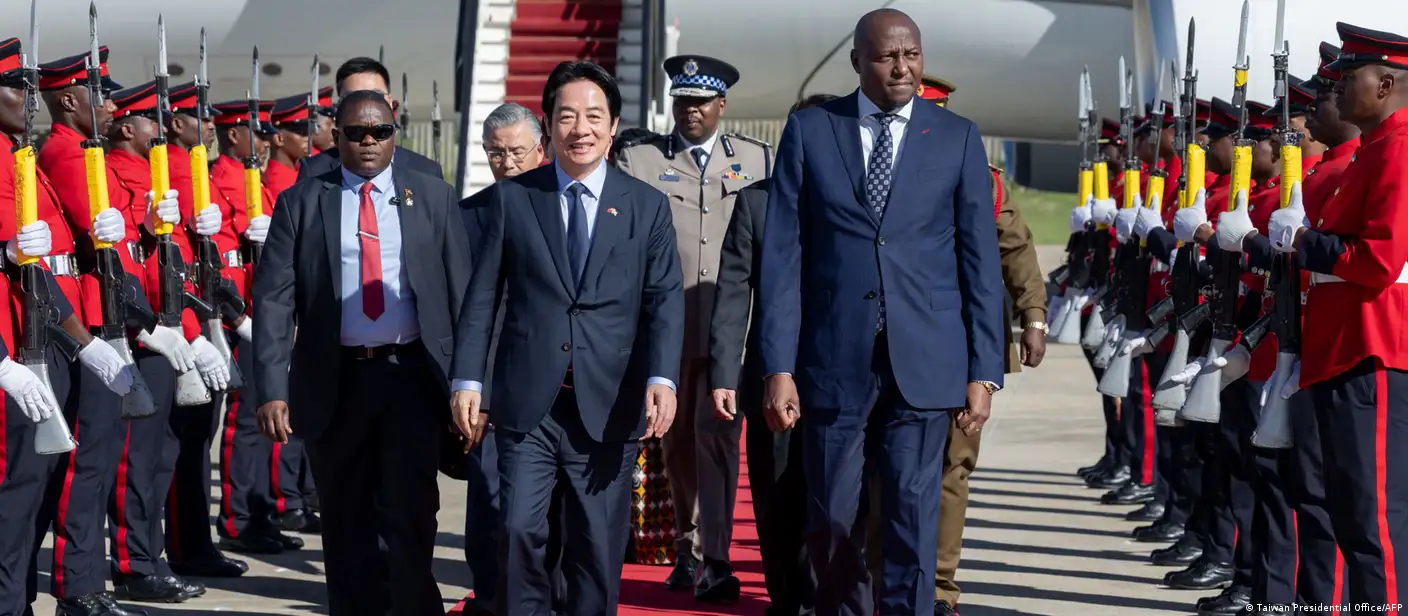
The Taiwan Eswatini Diplomatic Visit has drawn global attention as Taiwan’s leader moves forward with the trip despite strong objections from China. Lai Ching-te arrived in Eswatini on Saturday, calling the visit a sign of lasting friendship.
In a message shared online, Lai said the visit aims to strengthen ties between the two sides. He stressed that Taiwan will not be influenced by outside pressure and will continue to build partnerships around the world.
The trip had faced delays before it finally took place. Taiwan’s government said that Seychelles, Mauritius, and Madagascar had denied permission for Lai’s aircraft to pass through their airspace. Officials in Taipei suggested that this decision came after pressure from China.
Beijing denied applying economic pressure but praised the decisions made by those countries. The situation highlights ongoing tensions between China and Taiwan over international recognition and diplomatic relations.
Despite these challenges, Lai said the visit was made possible through careful planning by his diplomatic and security teams. He added that the trip would help deepen cooperation in areas such as the economy, agriculture, education, and culture.
The Taiwan Eswatini Diplomatic Visit is especially important because Eswatini is Taiwan’s only diplomatic ally in Africa. Over the years, the number of countries that officially recognize Taiwan has declined.
China considers Taiwan to be part of its territory and opposes any official ties between Taiwan and other nations. This position continues to shape global diplomacy and limits Taiwan’s international space.
Following Lai’s arrival, China’s Foreign Ministry strongly criticized the visit. A spokesperson described it as an inappropriate move and repeated Beijing’s stance that Taiwan is part of China. The ministry also urged countries to avoid supporting Taiwan’s independence efforts.
Taiwan rejects China’s claims. Lai has said that Taiwan is a self-governed democracy and has the right to engage with other countries. He also stated that Taiwan’s future should be decided by its own people.
Currently, Taiwan has formal diplomatic relations with only a small number of countries. Most of these partners are located in Latin America and the Caribbean. This makes each remaining alliance important for Taiwan’s global presence.
The Taiwan Eswatini Diplomatic Visit reflects a broader struggle over influence and recognition. While China seeks to limit Taiwan’s international role, Taiwan continues to maintain and strengthen its partnerships.
The visit also shows how smaller nations can play a key role in global diplomacy. Eswatini’s support gives Taiwan a presence in Africa, which holds both symbolic and strategic value.
As tensions continue, such visits are likely to remain sensitive. They often trigger strong reactions and highlight the complex balance between diplomacy and geopolitics.
For now, the Taiwan Eswatini Diplomatic Visit stands as a clear message from Taipei. Taiwan aims to defend its international ties and expand cooperation, even in the face of growing pressure.
