

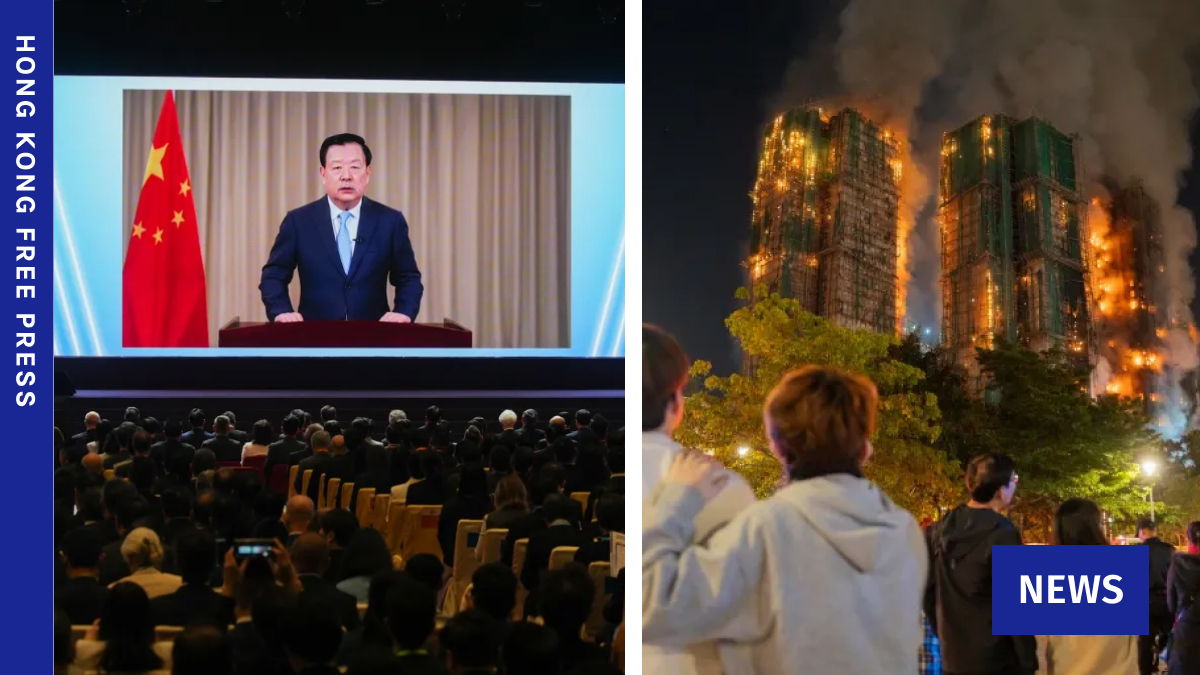
China’s top official for Hong Kong affairs, Xia Baolong, has issued a stark warning against what he termed the “politicising” of the deadly Tai Po fire. Speaking via video at a National Security Education Day ceremony, Xia, director of the Hong Kong and Macao Affairs Office, condemned “malicious people” for attempting to use the November 26 blaze, which claimed 168 lives at Wang Fuk Court, to “stir up chaos” in the city. This strong rebuke from Beijing’s highest authority on Hong Kong affairs signals a serious concern over any perceived attempts to leverage the tragedy for political ends, emphasizing the ever-present vigilance required against acts that could undermine stability under the national security framework. His remarks underscore a zero-tolerance approach to dissent or criticism framed within a disaster.
Xia Baolong further elaborated on persistent national security risks in Hong Kong, even six years after the imposition of the national security law. He cautioned that “anti-China and anti–Hong Kong troublemakers are still plotting and biding their time to launch a comeback,” urging vigilance against “external forces meddling and interfering.” Echoing these sentiments at the same event, Hong Kong Chief Executive John Lee reiterated that some individuals were “using the disaster to stir up chaos” and “to incite hatred.” Lee asserted that the government’s “swift action and decisive law enforcement” had restored normalcy and vowed to hold accountable those responsible for the fire, promising “systematic reforms” once the independent committee, chaired by Judge David Lok, completes its ongoing investigation.
This is not the first time authorities have issued such warnings. Days after the fire, on November 29, Beijing’s Office for Safeguarding National Security (OSNS) cautioned against “anti-China disruptors” using the tragedy to “incite resentment.” In early December, the Hong Kong government explicitly denounced “foreign forces, including anti-China media organisations, and anti-China and destabilising forces” for making “unfounded and slanderous remarks” to “stir up chaos.” More recently, in February, security chief Chris Tang warned of “soft resistance” tactics involving false claims about the tragedy, leading to three individuals being charged under Article 23, Hong Kong’s local national security law, for comments related to the blaze.
The consistent stream of warnings from both Beijing and Hong Kong officials highlights a concerted effort to control the narrative surrounding the Tai Po fire and to prevent any public discourse that could be perceived as critical of the government or a threat to national security. The emphasis on “politicising” and “stirring up chaos” reflects a broader strategy to delegitimize any criticism by linking it to subversive activities. As the independent committee continues its investigation, the authorities maintain a firm stance that any attempt to exploit the tragedy for political agitation will be met with resolute enforcement under the strict national security provisions, underscoring the delicate balance between public grievance and perceived state security.
