

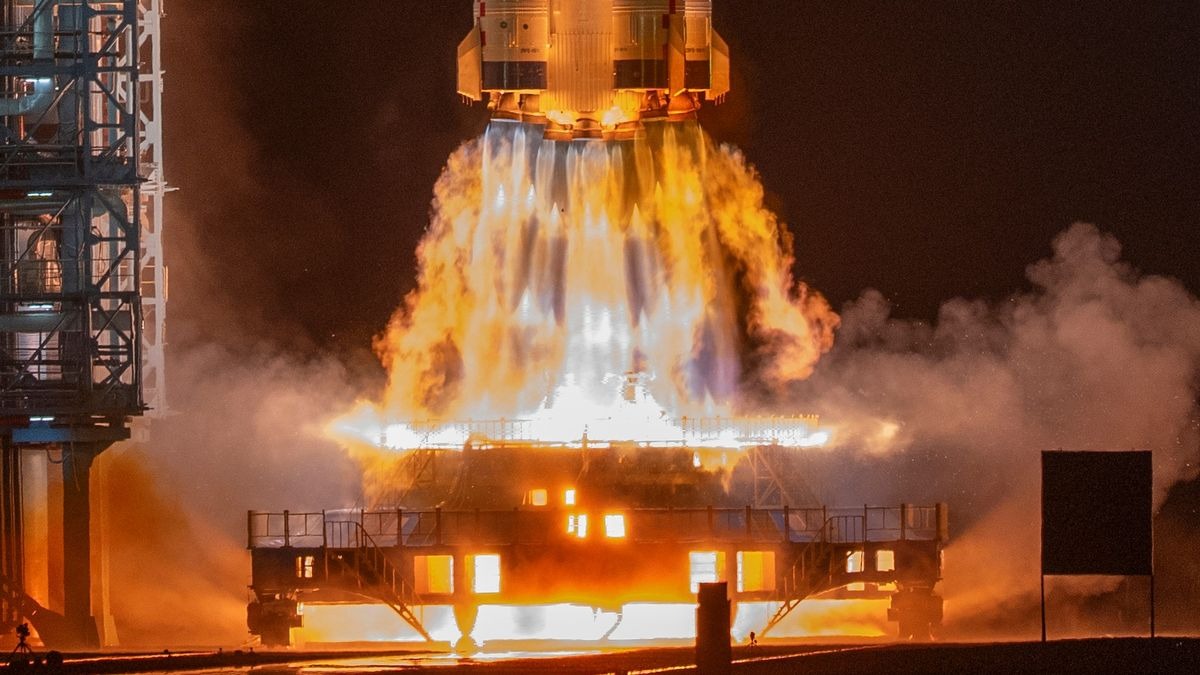
A Pakistani astronaut is set to make history by joining the crew of China’s Shenzhou 24 spacecraft. The mission will mark the first time a foreign national boards China’s space station as part of its manned space programme, according to Chinese state media.
The China Manned Space Agency confirmed that the Pakistani astronaut will take part in a short stay in orbit. After completing the mission, the astronaut is expected to return to Earth aboard the Shenzhou 23 spacecraft. China’s official news agency Xinhua reported the plan on Saturday.
Officials have not announced a launch date for the mission. However, the flight will represent a major step in China’s efforts to expand international cooperation in human spaceflight.
The mission will also be the first joint flight involving Chinese and foreign astronauts in the country’s manned space programme. Until now, China’s crewed space missions have involved Chinese nationals.
The astronaut will take part in the mission as a payload specialist. The role involves supporting assigned scientific or technical tasks during the flight. The short-term mission is expected to give Pakistan its first opportunity to send an astronaut to China’s orbital station.
Earlier this year, Xinhua reported that two Pakistani candidates had begun training alongside Chinese astronauts. The candidates are Muhammad Zeeshan Ali and Khurram Daud. One of them will be selected for the upcoming flight.
Their training has focused on developing the practical skills needed to work in space. It includes learning how to operate equipment and carry out tasks in the conditions of an orbital mission.
Language training has also formed an important part of the preparation. The candidates have received intensive Chinese language instruction to help them communicate and work with Chinese crew members.
The selection process is part of a wider agreement between China and Pakistan signed in February 2025. The agreement created a framework for cooperation in human spaceflight and opened the way for a Pakistani astronaut to take part in a Chinese mission.
The partnership reflects the close relationship between the two countries. China and Pakistan already cooperate in areas such as infrastructure, trade, technology, and defence. Space exploration is now becoming another area of joint activity.
For Pakistan, the mission would be a major achievement in its developing space programme. Sending an astronaut to China’s space station would provide valuable experience and help build skills in human spaceflight.
For China, the flight offers an opportunity to demonstrate its ability to work with international partners. It also supports Beijing’s wider ambition to make its space station a platform for scientific research and cooperation with other countries.
China has invested heavily in its space programme over recent years. Its space station is a key part of those efforts and allows astronauts to conduct research while living and working in orbit.
The country is also preparing for a much larger goal: sending astronauts to the Moon. Beijing aims to complete its first crewed lunar landing by 2030. The planned mission is part of a broader programme to expand China’s presence beyond Earth.
The United States remains China’s main competitor in the race to return humans to the lunar surface. NASA is targeting 2028 for its planned crewed lunar landing, placing the two countries on different timelines for their next major steps in space exploration.
The competition has increased the importance of technological development, spacecraft testing, and international partnerships. Both countries are working to strengthen their capabilities for future missions.
China’s planned cooperation with Pakistan adds an international dimension to its programme. The Shenzhou 24 mission could provide the first practical example of a foreign astronaut joining a Chinese crew in orbit.
Although the Pakistani astronaut’s stay will be short, the mission is expected to carry wider importance for both countries. It will test their ability to prepare and support a joint crewed flight and could create opportunities for further cooperation.
The identity of the astronaut selected from the two Pakistani candidates and the launch schedule remain to be confirmed. Once those details are announced, preparations will move closer to a mission that could mark a new chapter in Pakistan-China space cooperation.
