

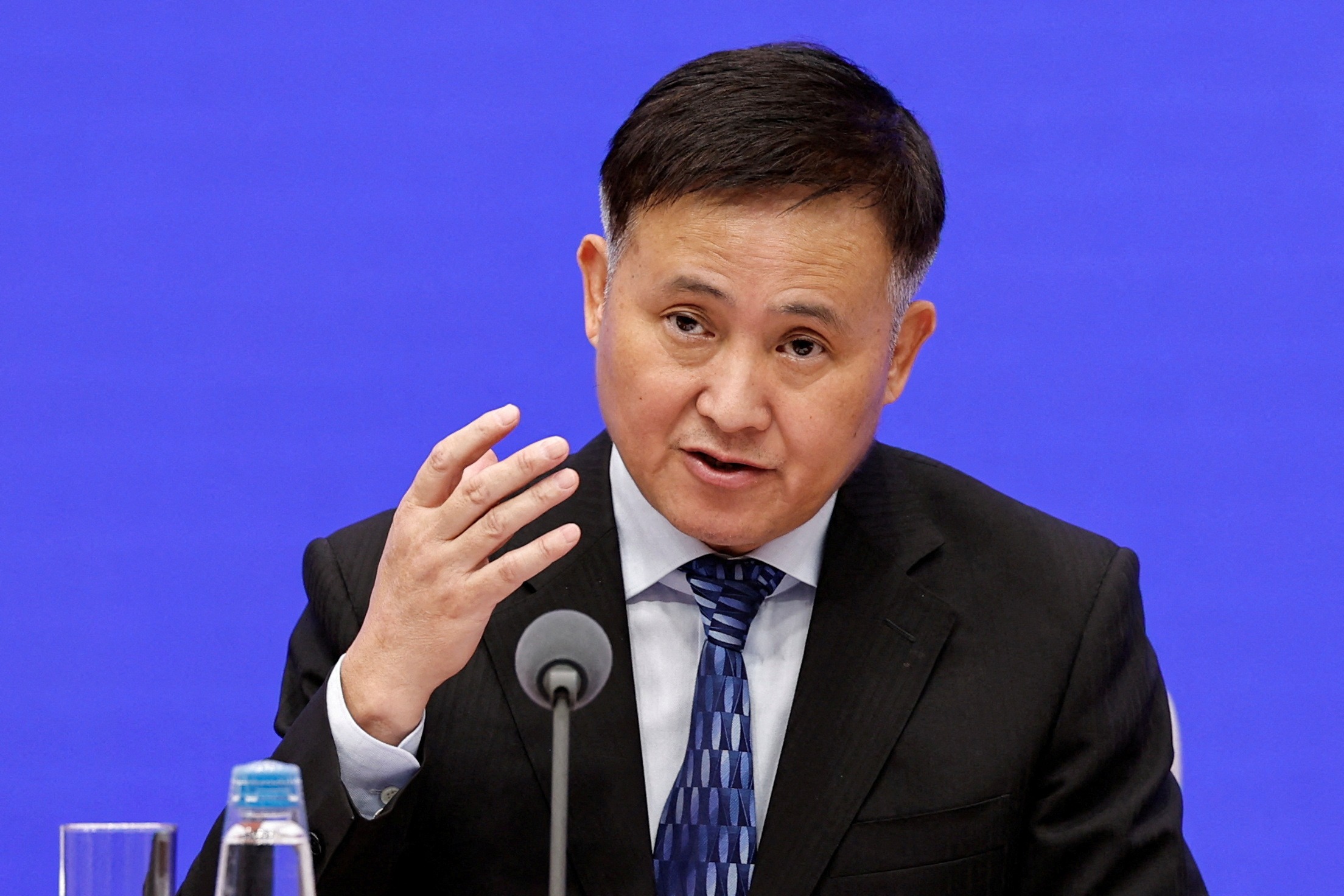
China’s central bank governor has called for closer monitoring of fiscal risks in major advanced economies, saying the International Monetary Fund should also assess how these risks affect the global economy.
Pan Gongsheng, governor of the People’s Bank of China, made the remarks on Saturday at a meeting of the International Monetary and Financial Committee in Bangkok. The meeting was part of the annual gatherings of the IMF and World Bank.
Pan said China supports stronger IMF surveillance of fiscal risks and their effects across national borders. His comments come as rising borrowing costs, large budget deficits and unstable investor sentiment put pressure on global bond markets.
Government borrowing has become a growing concern in several major economies. Higher interest rates make it more expensive for governments to service their debt. At the same time, large budget deficits can add to borrowing needs and increase pressure on bond markets.
Investor concerns have helped trigger a broad sell-off in government bonds. Heavy spending on artificial intelligence has added another source of uncertainty, as firms invest large sums in data centres, computing power and other technology infrastructure.
Changes in bond prices can affect governments, banks, businesses and households. When bond prices fall, yields generally rise. Higher yields can increase the cost of new borrowing and put pressure on financial markets around the world.
Pan called on the IMF to study global economic imbalances more closely. He also urged the fund to give greater attention to financial factors, including capital flows, that can influence these imbalances.
Capital flows refer to money moving between countries through investments and financial transactions. Sudden shifts in these flows can affect exchange rates, asset prices and the ability of countries to fund their borrowing needs.
China’s call for stronger oversight reflects its view that financial risks in major economies can spread beyond their borders. Large changes in interest rates or investor confidence in one market can influence borrowing costs and investment decisions elsewhere.
Pan also reaffirmed China’s support for the multilateral trading system. He said Beijing opposes all forms of protectionist measures.
His comments come amid wider debate over the direction of the Chinese economy. Earlier in the week, IMF Managing Director Kristalina Georgieva said China needed to move away from a growth model driven mainly by exports and give a greater role to domestic consumption.
The IMF has repeatedly discussed the need to address economic imbalances. Strong reliance on exports can leave an economy exposed to changes in overseas demand, trade restrictions and shifts in global supply chains. Stronger domestic consumption can help support growth through household spending and local demand.
For China, boosting domestic consumption remains a key economic challenge. Households must be willing and able to spend more, while businesses need confidence to invest and hire. Changes in consumer demand can take time, making the shift from export-led growth a complex process.
The debate over fiscal risks also highlights the different pressures facing major economies. Governments need to fund public services and investment while managing debt and keeping borrowing costs under control. At the same time, financial markets can react quickly to concerns about future spending, inflation and interest rates.
The IMF’s role includes monitoring economic developments and advising its member countries on risks to financial stability. Closer surveillance of fiscal policy could help identify problems that may spread across borders, although governments remain responsible for their own budget decisions.
Pan’s remarks signal China’s support for a broader review of the links between public finances, capital movements and global economic stability. They also show Beijing’s continued public backing for international economic cooperation, alongside its opposition to protectionist trade policies.
As global bond markets face pressure, fiscal policy and financial stability are likely to remain important issues for international policymakers. The challenge for the IMF and its members will be to identify risks early while supporting steady growth and an open global trading system.
