

Leon Lv wanted to try something different when planning a trip last year. The 28-year-old from Chongqing, south-west China, searched the social media app RedNote for travel ideas. Soon, videos of people facing strong winds and sudden floods caught her attention.
She had never experienced a typhoon and wanted to learn what it felt like. But she also wanted to stay safe while testing her limits.
“I never experienced a typhoon. I don’t know how it will feel and what will happen,” she said. She had only seen such storms on the news. That made her look for a place where she could face a disaster-like event without being in real danger.
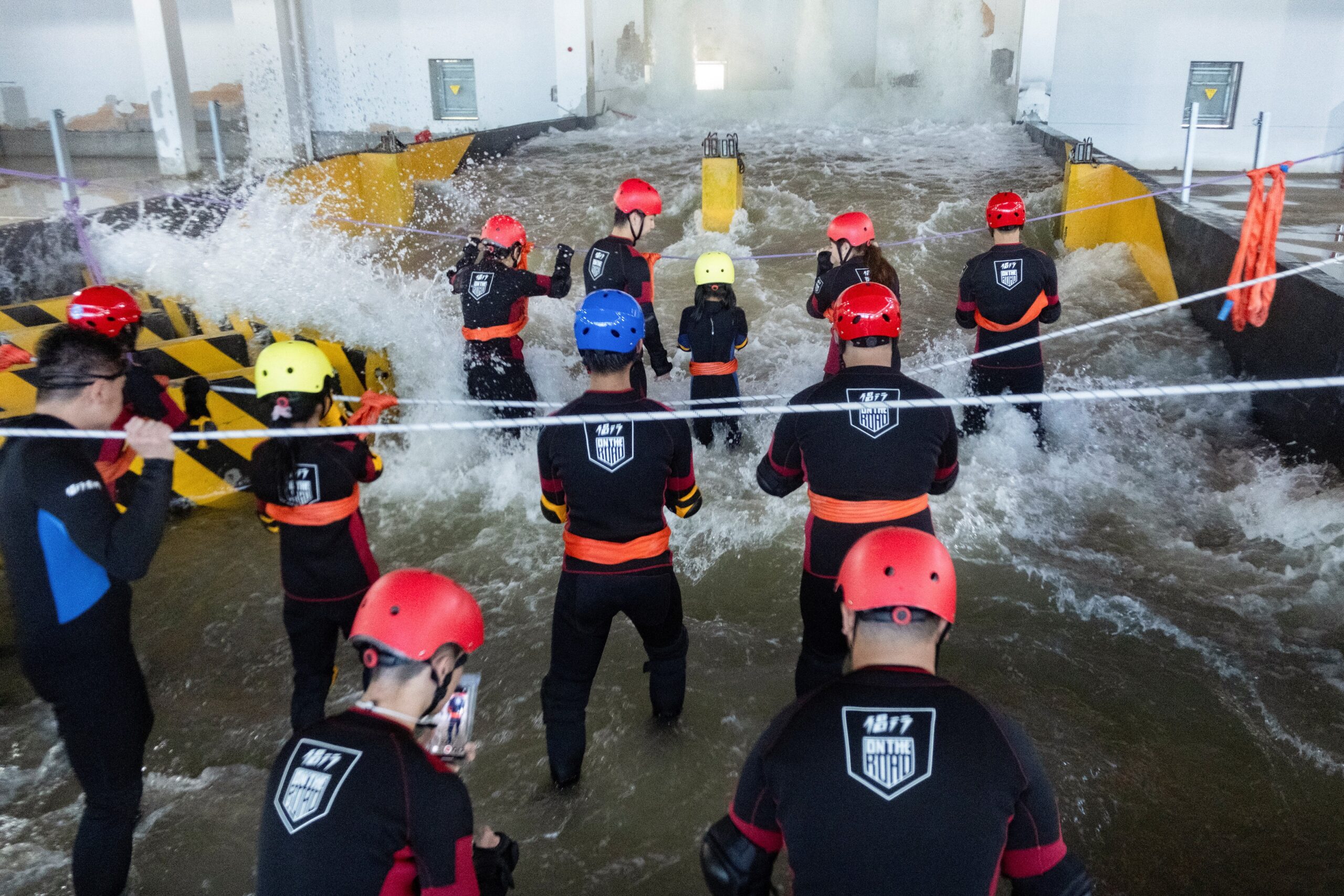
Lv travelled more than 1,300 kilometres to Hangzhou in eastern China. There, she joined 20 other people for a disaster training session that recreated flooding caused by a typhoon.
The exercise put her in the path of a powerful rush of water. Hundreds of tonnes of water swept participants off their feet and pushed them towards a safety barrier. For a moment, Lv forgot that the danger was not real.
The experience taught her how to stay calm and use the right body position in a flood. She said the lesson was more useful than reading about disasters in a book or learning about them in school.
Her trip reflects a growing trend in China. Online users have begun talking about “paying to suffer” and “paying to buy fear.” These phrases describe activities that let people experience discomfort, danger or fear in a controlled setting.
The trend is linked to dark tourism, a term often used for travel connected to disasters, death and tragic events. In China, some visitors are now seeking simulated emergencies that offer both thrills and practical lessons.
One company drawing attention is Lvxing Base in Hangzhou. It offers visitors a chance to experience simulated natural disasters at a large training site. The founders spent 10 years making documentaries in some of the world’s harshest environments before building the attraction.
The facility covers 200,000 square metres and opened in 2024. It recreates conditions linked to extreme weather, including typhoons and mudslides. Visitors can face strong winds, heavy rain and rushing water while learning how to react in a crisis.
Wang Kuanghan, the company’s general manager, said many visitors come for excitement. They want to feel what a real typhoon or downpour might be like and see how well they can handle it.
Most individual customers are between 20 and 30 years old, he said. The company plans to open five more centres across China over the next three years. It also hopes to add simulations for earthquakes and fires.
Private companies are not the only ones offering such experiences. Public safety centres and museums are also using technology to teach emergency skills.
At Beijing’s Haidian public safety museum, visitors can experience simulated earthquakes, tsunamis and fires in a 4D theatre. Moving platforms and sound effects help create the feeling of being in a disaster.
The southern city of Guangzhou opened a five-storey centre in 2025 to teach people how to respond to emergencies. Its earthquake simulator can recreate shaking similar to that of a magnitude 7.2 earthquake.
These facilities offer more than entertainment. They also reflect growing concern about the effects of extreme weather and other disasters in China.
In 2025, the country recorded its highest number of hot days since records began. It was also hit by 10 typhoons, a total well above the long-term annual average. China’s Ministry of Emergency Management reported that disasters affected 67 million people across the country.
As climate risks grow, officials have sought new ways to prepare the public. In 2024, local governments were instructed to promote immersive disaster education. Safety centres, museums and training sites were encouraged to use simulations to teach people how to respond when a real emergency occurs.
The appeal of these experiences lies in the chance to face fear without the full risks of a real disaster. Visitors can feel the force of water or wind while learning how to protect themselves.
Still, a simulation cannot fully reproduce the confusion and danger of a real emergency. Actual disasters may involve damaged buildings, blocked roads, power cuts and limited access to help.
For visitors such as Lv, however, the experience offers a lesson that can be hard to gain from books alone. As more centres open, China’s disaster simulations may become both a new form of adventure tourism and a way to help people prepare for emergencies.
