

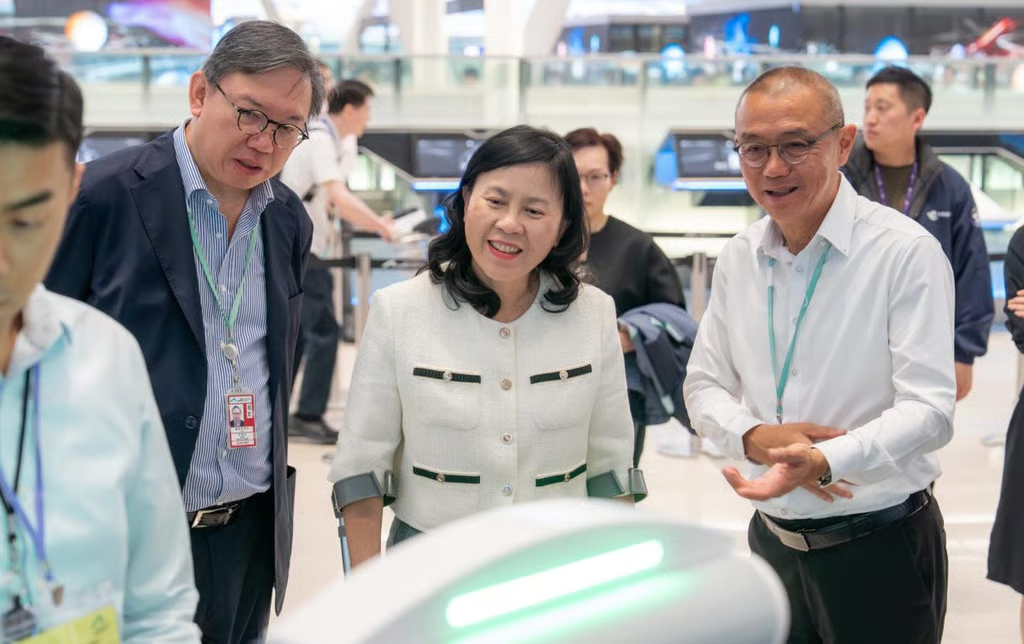
Hong Kong is preparing for a major upgrade as Hong Kong Terminal 2 opens at Hong Kong International Airport on May 27. The new facility is part of a large airport expansion plan. Officials say it will make travel faster and easier for passengers. The terminal uses new digital systems to reduce delays and improve flow. It is designed to handle millions of passengers each year.
Transport authorities say the upgraded Terminal 2 focuses on speed and convenience. It includes many self-service check-in counters and automated bag drop machines. Passengers can check in quickly without waiting in long lines. Security checks also use electronic gates to reduce manual processing. After security, travelers move to immigration and boarding areas through fast automated systems.
The terminal is connected to different transport options including Airport Express trains, airport buses, cross-border coaches, and private cars. This makes access simple for travelers from different regions. The Airport Authority expects Terminal 2 to handle about eight million passenger trips in its first year. This will help reduce pressure on Terminal 1 and improve overall airport flow.
Fifteen regional airlines will move into Terminal 2 in stages between May 27 and June 10. These include HK Express, Hong Kong Airlines, Greater Bay Airlines, AirAsia, Batik Air Malaysia, Hainan Airlines, Philippine AirAsia, Thai AirAsia, Thai Lion Air, Cambodia Airways, IndiGo, VietJet Air, Bangkok Airways, Jeju Air, and Cebu Pacific. The move will help spread passenger traffic more evenly across terminals.
Airport authorities conducted a full drill at Terminal 2 before the opening. More than 1,100 staff and participants joined the exercise. Around 30 organizations took part to test safety and system readiness. Officials say the drill went smoothly and showed the terminal is ready for operation. The focus is on safety, speed, and passenger comfort.
Officials believe the new terminal will play a key role in strengthening Hong Kong as a global aviation hub. The upgrade is part of the wider three-runway system at Hong Kong International Airport. The project aims to increase capacity and improve service quality. Terminal 2 will help reduce crowding in Terminal 1 during peak travel hours. It will also support airlines that focus on regional routes.
Passengers will experience a more modern and faster journey through Terminal 2. Self-service tools will reduce the need for manual support. Travelers will be able to check in, drop bags, and pass security with fewer delays. The system is designed to be simple and easy to use for both local and international travelers. Officials say the goal is to improve comfort and reduce stress during departure.
Airlines will move into the new terminal in phases over two weeks. This staged approach helps reduce confusion during the transition. Airport staff will guide passengers to the correct terminals during the change. Airlines expect smoother operations once the move is complete. The system is designed to avoid disruptions during the switch.
New digital systems will connect check-in, baggage handling, and boarding processes. This integration allows real-time updates for staff and passengers. It reduces waiting time and improves accuracy. Electronic gates will speed up security checks and reduce manual paperwork. The airport aims to create a fully smart travel experience.
Experts say the expansion is important as regional airports compete for international traffic. Hong Kong wants to strengthen its position as a leading aviation hub in Asia. The new terminal is part of long-term planning to attract more airlines and passengers. Improved efficiency is expected to support tourism and business travel growth.
Passengers are advised to check flight information carefully during the transition period. Some services may shift between terminals depending on airline schedules. Authorities say clear signage and staff support will help travelers find their way. The goal is to make the airport more modern, efficient, and passenger friendly.
Terminal 2 marks a new step in Hong Kong’s aviation development and long-term airport strategy. Officials say it will support future growth.
