

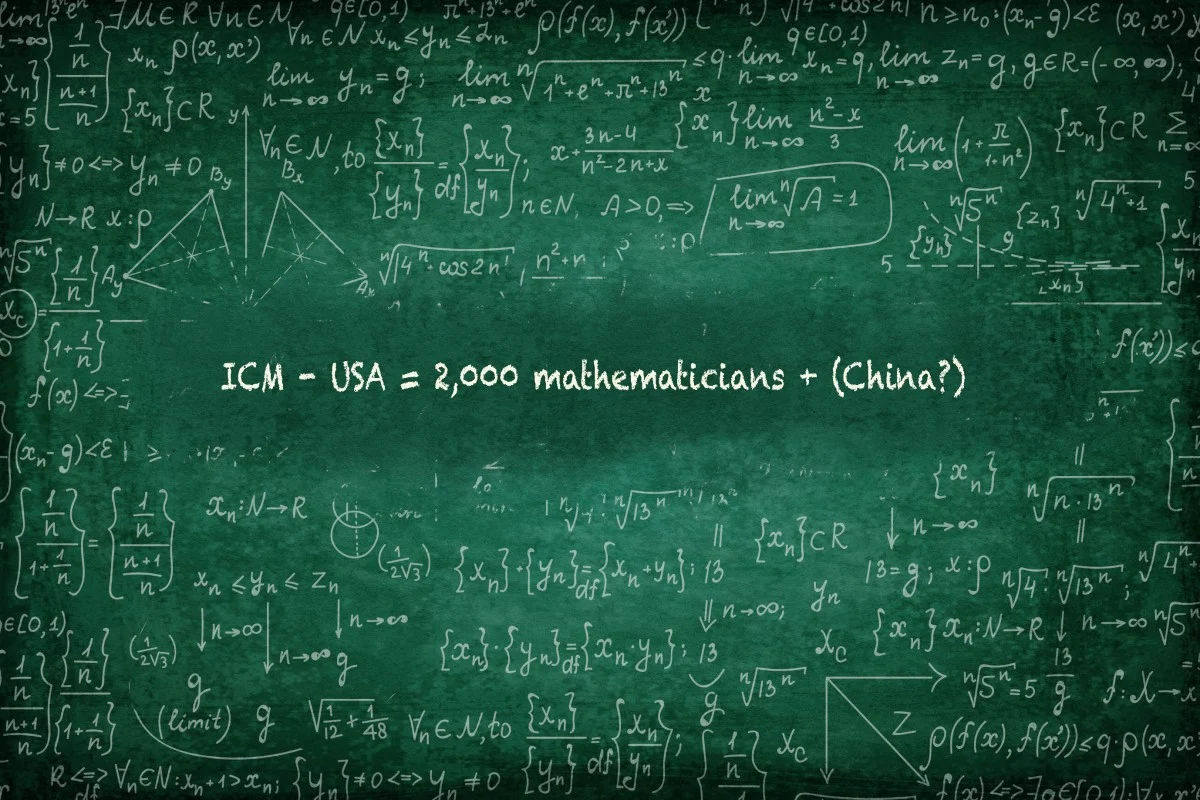
A growing math boycott United States movement is gaining global attention as tensions rise over where the world’s top mathematics conference should be held. The debate centers on the International Congress of Mathematicians, known as ICM, which is scheduled to take place in Philadelphia in July 2026.
The ICM is widely considered the most important event in global mathematics. It is also the platform where the Fields Medal is awarded, one of the highest honors in the field. Now, the decision to host the event in the United States has triggered strong opposition from parts of the academic community.
More than 2,300 mathematicians from at least 76 countries have signed an online petition linked to the math boycott United States campaign. The petition calls for the 2026 ICM to be moved out of the US. It also urges researchers to consider not attending the conference if it remains in Philadelphia.
Supporters of the boycott argue that the location raises concerns about accessibility, political tensions, and academic neutrality. They say international scientific events should be held in a way that ensures equal participation from researchers around the world.
The debate has now raised a key question. Will China’s mathematicians join the math boycott United States movement? So far, no official position has been announced by major Chinese academic institutions. However, China plays a major role in global mathematics research, and its participation could strongly influence the outcome of the dispute.
China is home to many leading mathematicians and research centers. Its universities regularly contribute to international collaborations and publish high-level research. If Chinese academics decide to support the boycott, it could significantly affect attendance at the 2026 ICM.
At the same time, some experts argue against a boycott. They say that scientific cooperation should remain separate from political disagreements. They warn that skipping major conferences could weaken global research exchange and slow scientific progress.
The organizers of the International Congress of Mathematicians have not changed the event location. They continue preparations for the Philadelphia meeting. They emphasize that the conference is open to researchers worldwide and aims to promote global scientific collaboration.
The math boycott United States campaign highlights a broader issue in international science. In recent years, academic events have increasingly faced political pressure and travel restrictions. Some researchers say this makes global cooperation more difficult.
The Fields Medal, awarded during the ICM, adds further importance to the event. It is often compared to a Nobel Prize for mathematics. Many leading mathematicians attend the conference specifically for the award ceremony and academic discussions.
If participation drops significantly, it could reduce the impact of the 2026 event. It may also affect networking opportunities for young researchers and international collaborations.
Supporters of the petition say their goal is not to isolate science but to encourage fair access. They argue that the location of global conferences should be chosen carefully to ensure inclusion and neutrality.
Opponents of the boycott believe that academic events should not be politicized. They say scientists should continue working together regardless of political disagreements between countries.
The question of whether China’s mathematicians will join the math boycott United States movement remains open. Their decision could shape the final outcome of the debate and influence participation levels at the 2026 conference.
For now, the mathematical community is divided. Some call for relocation of the event, while others continue preparations for a full global gathering in the United States.
As the conference date approaches, attention will focus on whether the boycott gains more support or loses momentum. The decision by major academic groups, including those in China, will be closely watched in the coming months.
