

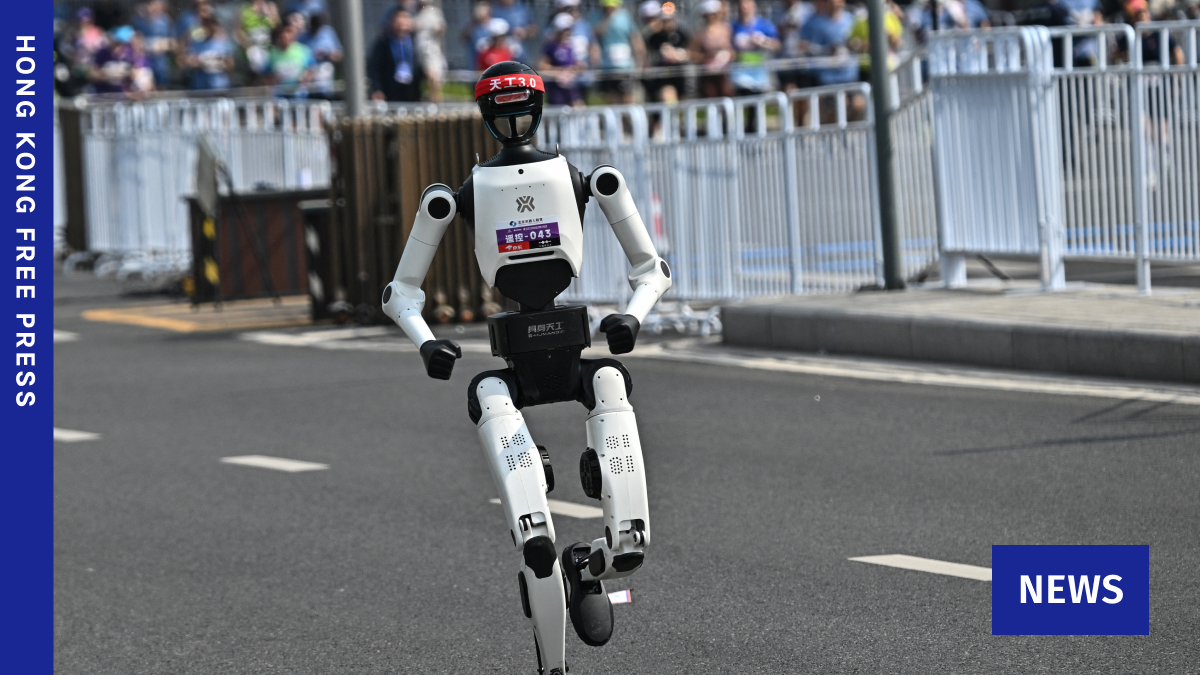
A humanoid robot has dramatically broken the world record at a Beijing half marathon, clocking an astonishing 50 minutes and 26 seconds for the 21-kilometer course. This groundbreaking achievement, showcased in the capital’s Yizhuang district, highlights the rapid technological advancements by Chinese manufacturers. Spectators witnessed machines and human competitors race in separate lanes to ensure safety, with some robots demonstrating remarkable agility akin to famed athletes. The winning humanoid, developed by Chinese smartphone maker Honor and equipped with an autonomous navigation system, maintained an average speed of approximately 25 kilometers per hour, according to state broadcaster CCTV.
This unprecedented speed not only far outpaced the leading human runner in Sunday’s event but also significantly surpassed the current men’s world record of 57 minutes and 20 seconds, held by Ugandan athlete Jacob Kiplimo. The result marks spectacular progress compared to last year’s performance, where robot-runners struggled, often falling and taking over two hours and 40 minutes to complete the race. The event also saw a substantial increase in humanoid entries, jumping from around 20 last year to more than 100, underscoring the burgeoning popularity and development within the robotics sector.
The technological leap, while exciting, also sparked mixed reactions among onlookers. Han Chenyu, a 25-year-old student, expressed enthusiasm for the advancements but voiced concerns about the potential impact on human employment, particularly with the rise of sophisticated artificial intelligence. Conversely, Xie Lei, 41, envision the widespread integration of humanoid robots into daily life within a few years, performing tasks such as housework, elderly companionship, basic caregiving, and even dangerous jobs like firefighting, reflecting a growing acceptance and optimism about their utility.
The half marathon’s core objective is to foster innovation and popularize the underlying technologies involved in creating and operating these advanced machines. China’s robust investment in robotics and embodied AI, reaching 73.5 billion yuan ($10.8 billion) in 2025, according to a government study, signals the industry’s significant strength. Xie Lei encapsulated the sentiment, noting that while humans have long dominated, robots are now “starting to surpass us” in specific fields like autonomous navigation, prompting both a sense of melancholy for humanity’s traditional role and immense imagination for future technological possibilities.
