

The global contest between democracy and autocracy presents a complex picture, with concerning trends in the West contrasting sharply with surprising resilience in the Global South. While nations like Iran exemplify ruthless repression, and far-right parties gain traction in European strongholds such as Britain, Germany, and France, further scrutiny reveals that autocrats often govern from a position of fear. Notably, the democratic ideal appears to hold higher esteem in many parts of the Global South than in traditional Western democracies, suggesting that the rise of autocracy is far from inevitable and that defenders of democracy are indeed on the right side of history. This perspective offers a crucial antidote to fatalistic despair.
In the West, a troubling segment of the population, often from the ethnic majority working class, is increasingly drawn to anti-democratic politicians. These individuals, grappling with economic stagnation, rising inequality, and a pervasive sense of being unheard and disrespected by governing elites, find solace in the far-right’s anti-establishment rhetoric and convenient scapegoating, despite the lack of practical solutions for their economic woes. To reclaim these alienated voters, pro-democracy parties must genuinely address their concerns by rejecting unbridled globalization, enhancing social services, tackling affordability issues, and adopting an inclusive rhetorical approach that transcends narrow identitarian appeals. This requires challenging the entrenched moneyed interests benefiting from the status quo.
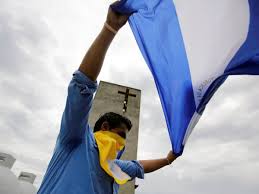
Conversely, the Global South demonstrates a powerful, popular embrace of democracy. In recent years, countless individuals have risked detention and death to protest autocracy and champion democratic values, from Hong Kong to Nicaragua, Russia to Uganda. These movements have achieved significant victories, ousting leaders in Bangladesh, Sri Lanka, Brazil, and Poland, and thwarting coups in South Korea. Even when crushed, such uprisings highlight the fragility of autocratic rule, forcing leaders to rely on repression rather than legitimacy. Autocrats’ reliance on rigged elections, as seen in Hungary or Belarus, often fails to confer genuine legitimacy, leading to “Zombie elections” when overt repression becomes necessary, as in Turkey or Russia with the imprisonment of opponents.
Autocracy’s inherent unpopularity stems from unaccountable governments invariably serving elite interests over public welfare, as evidenced by Orbán’s lavish spending in Hungary or Sisi’s vanity projects in Egypt while basic services falter. Even perceived autocratic successes, like China’s economic growth, are marred by dictatorial policies hindering long-term prosperity and revealing the superiority of democratic neighbors like Taiwan and South Korea. Singapore, often cited as an exception, remains a small city-state, limiting its global applicability. Ultimately, while democracies face challenges, their faults are minor compared to the alternatives. The yearning for accountable, responsive governments—exercised through free media, civil society, competitive parties, and peaceful protest—is a global phenomenon. The article concludes with a strong call for continued struggle for democracy, asserting that people everywhere, from the struggling West to the protesting Global South, want democracy.
