

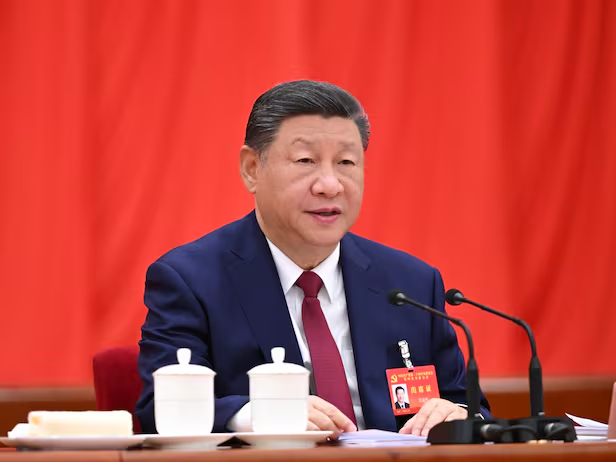
Xi Jinping has reinforced his leadership by presenting a sweeping economic strategy aimed at revitalizing China’s growth. Speaking at the recent Communist Party plenum, Xi addressed internal concerns and signaled a clear vision for the nation’s future.
The plan emphasizes heavy investment in industrial and technological sectors. Officials say these efforts are designed to transform the economy, drive innovation, and improve productivity across multiple industries. Xi stressed that such measures are essential for China to reach a “medium-level developed” income status by 2035.
Economists note that Xi’s strategy combines long-term economic planning with political stability. By promoting domestic innovation and industrial expansion, the initiative seeks to reduce dependency on foreign technology and create more high-quality jobs. Analysts say this approach strengthens China’s global competitiveness and supports sustainable growth.
The plenum also highlighted Xi’s continued influence within the party. By directly presenting the economic plan, Xi has quelled speculation about his authority and reassured party members of his strategic direction. Observers believe that this move solidifies his role as a central figure in shaping China’s economic and political future.
Key components of the strategy include boosting research and development, modernizing manufacturing, and increasing investment in green technologies. These steps are expected to enhance China’s productivity while aligning with global sustainability trends. Officials emphasize that innovation-led growth will be critical to achieving the 2035 income target.
Experts highlight that achieving “medium-level developed” status will require consistent reforms and strategic execution. Xi’s plan calls for targeted support to emerging industries and encourages collaboration between government and private sectors. Economists say this dual approach can stimulate domestic demand, improve living standards, and ensure long-term economic resilience.
China’s economic performance in recent years has faced challenges, including global trade pressures and slowing growth rates. The new strategy seeks to address these concerns by diversifying investment and fostering technological self-reliance. Analysts argue that Xi’s plan reflects a careful balancing of growth objectives and political priorities.
In addition, the strategy signals China’s intent to maintain a leading role in global economic affairs. By promoting high-tech industries and advanced manufacturing, the country aims to expand its influence in international markets. Xi’s vision combines domestic development goals with a broader strategy to enhance China’s global standing.
Party officials point out that the 2035 goal is ambitious but achievable with coordinated effort across all sectors. The plan sets clear milestones, including increased innovation output, upgraded infrastructure, and a stronger domestic consumer base. Analysts say meeting these targets will depend on effective policy implementation and the support of both state and private actors.
Observers also note that Xi’s direct involvement in economic planning underscores the intertwining of political leadership and economic strategy in China. By taking personal responsibility for the plan, Xi sends a message of stability and continuity to both domestic and international audiences.
Overall, Xi Jinping’s economic strategy aims to ensure China’s sustained growth, technological advancement, and improved living standards. By focusing on innovation, industry, and long-term planning, the plan lays out a clear path for achieving medium-level developed income status by 2035 while reinforcing Xi’s leadership role.
