

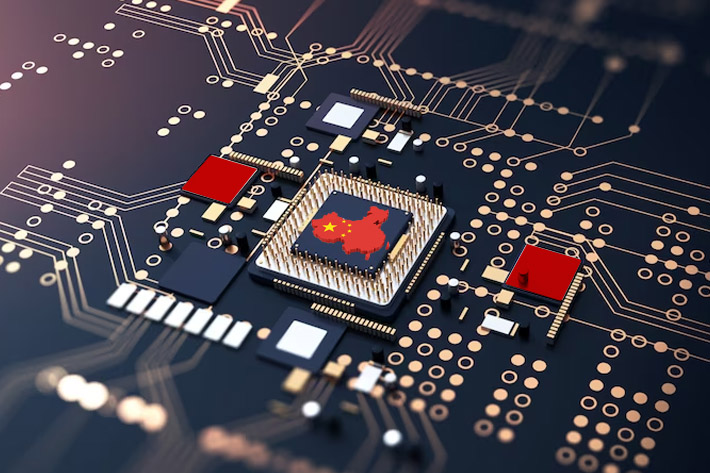
China has officially added domestically-made AI chips to its government procurement list for the first time. Companies like Huawei and Cambricon are now eligible to supply AI chips to government projects, signaling a major push toward technological self-reliance.
The move aims to strengthen local chipmakers and reduce dependence on foreign technology. By prioritizing homegrown AI hardware, the government hopes to boost innovation and support the growth of domestic tech industries.
Analysts say this decision could significantly expand the market for Chinese chipmakers. Government contracts often provide stable demand and funding, which can accelerate research, development, and production capacities.
China’s AI chip market has grown rapidly in recent years, driven by demand for cloud computing, data centers, and AI applications across industries. Including domestic chips in government procurement could further stimulate this growth and solidify China’s position in the global AI sector.
The inclusion also reflects broader strategic goals. China has been promoting technological self-reliance as part of its long-term economic and national security plans. Reducing reliance on foreign chips helps protect critical infrastructure and sensitive data.
Huawei and Cambricon are among the first companies expected to benefit. These firms have developed advanced AI processors capable of powering large-scale machine learning, facial recognition, and data analysis applications. Government adoption provides validation and encourages other sectors to adopt domestic solutions.
The procurement policy could also attract investment into local chip startups. Investors are likely to see government-backed projects as lower-risk opportunities, helping smaller companies scale production and improve technology.
Experts note that this step aligns with China’s “Made in China 2025” initiative, which emphasizes domestic production of key technologies including semiconductors, AI hardware, and high-tech manufacturing. Government support is a crucial lever for advancing these priorities.
The move may also influence global supply chains. As China promotes local AI chip adoption, international competitors may face increased competition in both domestic and global markets. Some analysts predict it could accelerate innovation as foreign firms strive to maintain market share.
Industry observers see this as a signal that China is serious about becoming self-reliant in critical technologies. Domestic AI chip adoption by government agencies could pave the way for broader use in private enterprises, public services, and strategic projects.
The initiative is expected to generate long-term benefits for the domestic tech ecosystem. By integrating locally made AI chips into major government projects, China strengthens its technology infrastructure while providing domestic companies with growth opportunities.
This policy marks a milestone for China’s AI industry. It reflects the government’s commitment to supporting homegrown innovation, strengthening economic sovereignty, and fostering an ecosystem where domestic chipmakers can thrive.
