

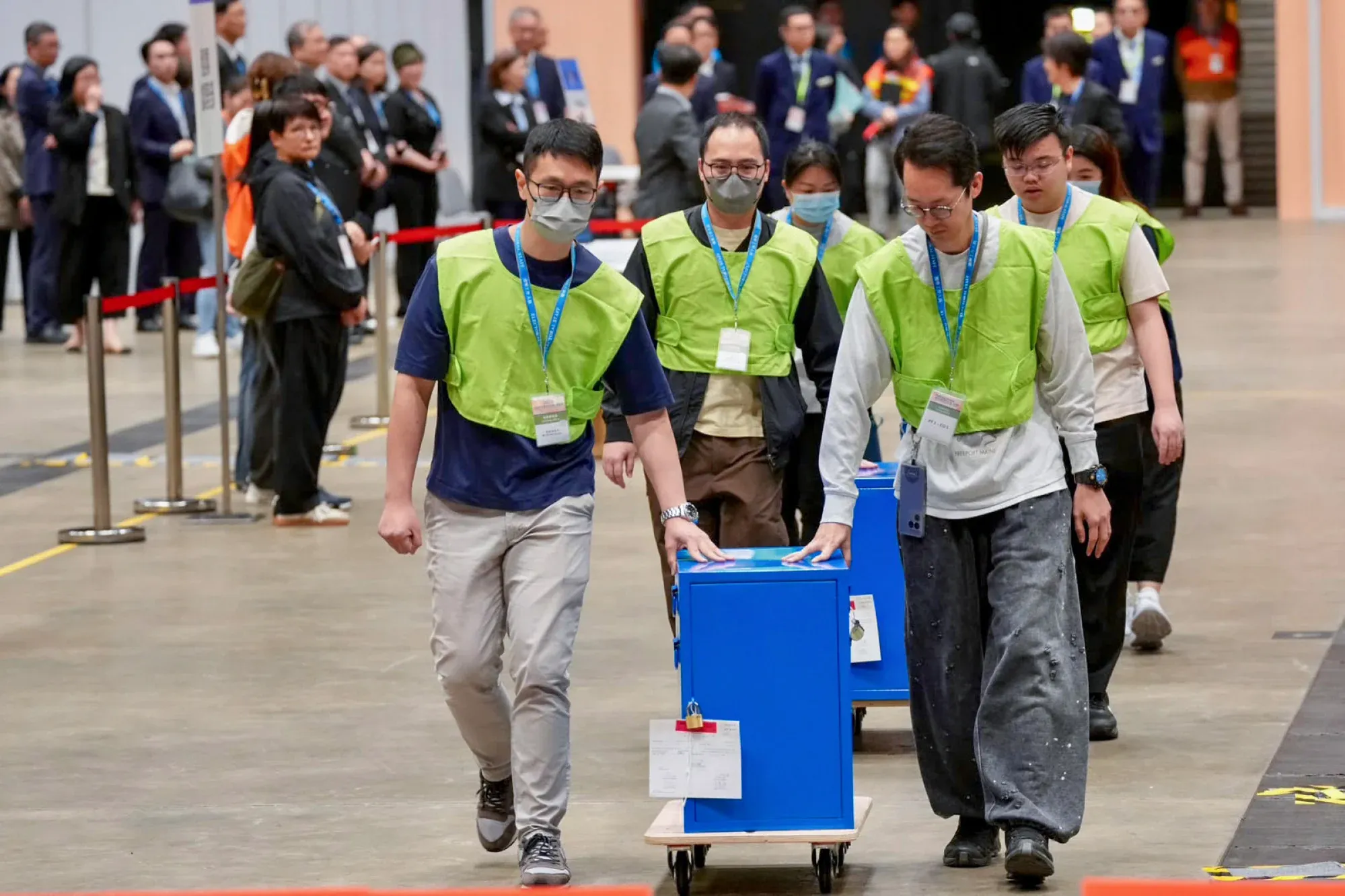
Hong Kong’s Election Committee election recorded a high level of participation on November 22, with turnout reaching 96 per cent by mid-afternoon. Voters were choosing representatives for a powerful body responsible for selecting the city’s next chief executive. The election attracted attention because the committee plays an important role in Hong Kong’s political system, including its influence over future leadership and legislative elections.
A total of 856 candidates were competing for 723 elected seats across 31 subsectors. The successful candidates will join members from uncontested subsectors, ex officio representatives and people nominated by designated organisations to form the full 1,500-member Election Committee. Five polling stations were operating across the city, with voters coming from different professional, commercial and community groups.
The committee has significant responsibilities beyond the current election. Its members will take part in nominating and selecting candidates for the next chief executive election. The body will also nominate candidates and elect 40 members of the Legislative Council in the 2029 election. These responsibilities make the committee an important part of Hong Kong’s political structure and give the subsector poll considerable importance.
The strong turnout was being closely watched by political observers because participation levels are often treated as an indicator of public engagement with the electoral process. The 2026 contest involved more contested subsectors than the previous election in 2021, creating a more competitive environment for candidates. As voting continued, attention focused on the final turnout figure and the composition of the new committee, which will play a central role in Hong Kong’s political decisions over the coming years.
