

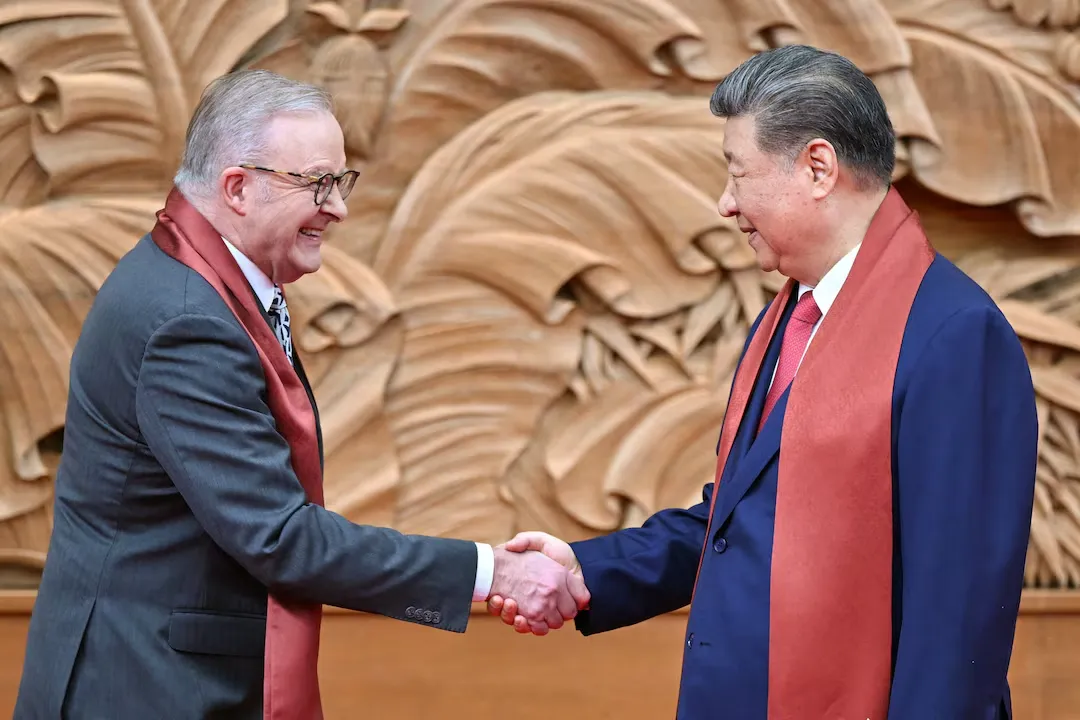
Chinese President Xi Jinping has said relations between China and Australia have undergone a major improvement and called for closer cooperation in several important areas. Speaking during a meeting with Australian Prime Minister Anthony Albanese on the sidelines of the APEC summit in Shenzhen, Xi described the relationship as having experienced a comprehensive turnaround since Albanese became prime minister in 2022. He said both countries should build on the progress made in recent years and work together on agriculture, energy, artificial intelligence and the green economy. The meeting reflects China’s interest in strengthening ties with an important regional trading partner.
The relationship between the two countries had deteriorated under Australia’s previous centre-right government, particularly after Canberra called for an investigation into the origins of the Covid-19 pandemic. Beijing strongly opposed that move, and the disagreement contributed to trade restrictions affecting several Australian exports. Since then, China has removed a number of barriers, allowing trade to recover in important sectors. Albanese said the two governments would continue to discuss their differences directly and constructively, adding that stable relations were beneficial for both countries and the wider region.
The leaders also discussed opportunities to expand cooperation in areas that are becoming increasingly important to the global economy. Agriculture and energy remain major parts of Australia’s trade relationship with China, while artificial intelligence and green technology could create new opportunities for investment and research. Stronger people-to-people exchanges were also raised as a way to improve understanding between the two societies. Albanese was expected to travel to Beijing after the meeting to hold further discussions with Chinese Premier Li Qiang, accompanied by senior Australian business representatives.
Despite the positive language, several disagreements remain unresolved. Tensions have occasionally increased over security issues, including China’s military activities in the Pacific and the detention of Australian nationals on spying-related charges. Trade negotiations involving iron ore have also become more difficult as China’s state-backed purchasing system gains greater influence over contracts. Australian officials have warned that any manipulation of trade would violate international rules and threaten national revenue. The latest meeting suggests that both governments want to keep relations stable, but the long-term success of their cooperation will depend on how they manage these sensitive political and economic differences.
