

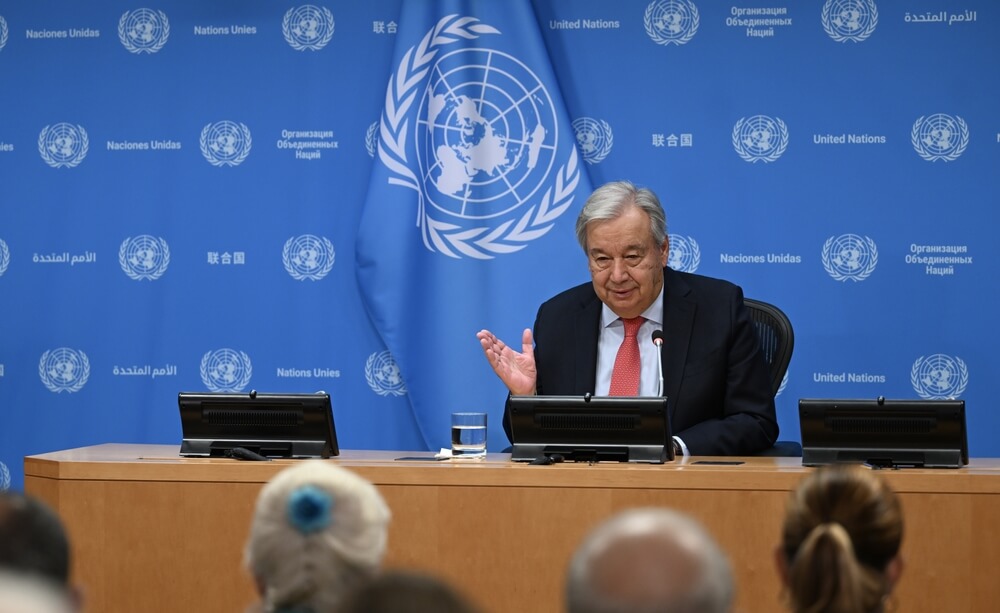
United Nations Secretary-General Antonio Guterres has issued a stark warning that the organisation could run out of money by July unless member states pay their dues in full and on time. Chronic budget shortfalls and delayed contributions are forcing the UN into hiring freezes and program cutbacks.
Mounting Unpaid Contributions Threaten Operations
Guterres highlighted that some member states fail to pay mandatory contributions, while others pay late, creating a growing financial strain. By the end of 2025, unpaid contributions totaled around $1.6 billion—more than double the amount in 2024—even though over 150 countries had paid.
“The current trajectory is untenable,” Guterres wrote, warning that the UN is exposed to structural financial risk. He added that, without immediate improvement in collections, the 2026 programme budget cannot be fully executed and regular budget funds could run out by July.
Political Tensions and US Funding Cuts
The warning comes amid reductions in funding from the Trump administration, which has also rejected or delayed some mandatory contributions. Trump has repeatedly questioned the UN’s relevance, criticised its priorities, and this month launched a “Board of Peace,” which critics say could rival the UN.
Compounding the challenge, tensions between the United States, Russia, and China—each with veto power on the Security Council—have left the council largely paralysed, hampering the UN’s decision-making.
A “Kafkaesque Cycle” of Financial Strain
The UN must also reimburse member states for unspent funds, even when it lacks the cash to do so. Guterres described this as a “Kafkaesque cycle,” writing that the organisation is expected to return money that does not exist.
In his final annual address before stepping down at the end of 2026, Guterres condemned “self-defeating geopolitical divides” and “brazen violations of international law,” as well as sweeping cuts to development and humanitarian aid—likely referencing the US’s “America First” policy. Without urgent action from member states, the UN’s ability to operate effectively faces serious risk.
