

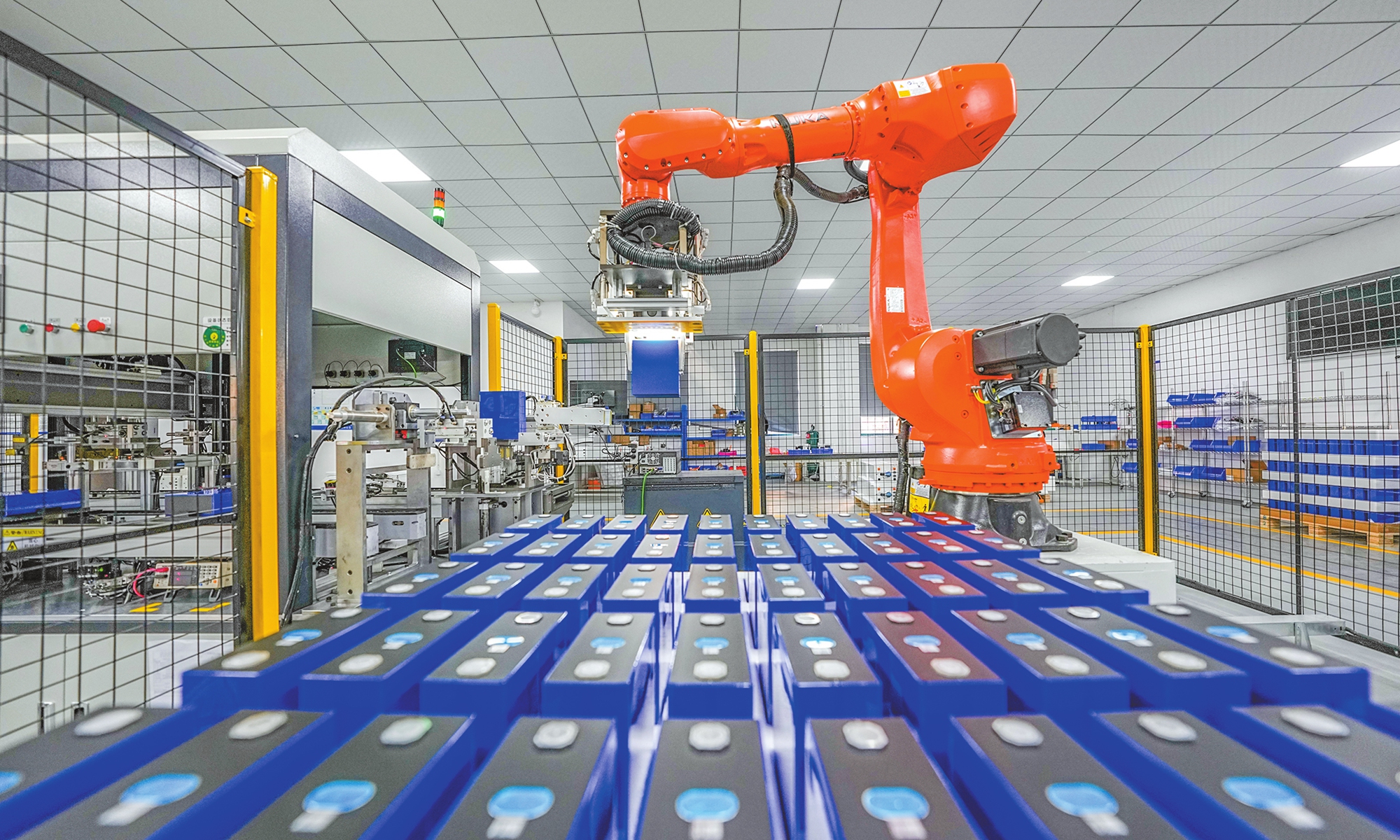
China’s recent power sector reforms, combined with rising global demand, are driving a surge in battery manufacturing. Chinese companies are now leading the world in lithium-ion battery production and exports, with shipments surpassing $65 billion this year.
The reforms aim to increase efficiency and profitability in battery storage, helping domestic manufacturers scale production and reach international markets. Analysts say these changes are positioning China as a central hub in the global energy transition.
Lithium-ion batteries, critical for electric vehicles, renewable energy storage, and electronics, have seen unprecedented demand. China’s policy adjustments encourage investment in production capacity, research, and innovation, enabling companies to meet growing global needs.
Exports are already at record levels. Chinese firms are supplying batteries to Europe, North America, and Asia, with significant growth expected in coming years. Economists note that China’s dominant position is reshaping global supply chains and accelerating the shift toward clean energy technologies.
Industry experts highlight that increased profitability from reforms allows manufacturers to invest in larger facilities, advanced technology, and workforce expansion. This not only supports domestic growth but also strengthens China’s competitive advantage internationally.
The global rise in electric vehicles and renewable energy adoption is a major driver of battery demand. Policymakers worldwide are seeking secure, affordable supply chains, and China’s expanded production capacity positions it as a key supplier for global markets.
Chinese battery makers are also improving efficiency and sustainability in production. New technologies reduce energy consumption, lower costs, and decrease environmental impacts, aligning with global goals for greener energy solutions.
Financial analysts say China’s reforms make battery storage more attractive to investors. By reducing operational barriers, improving grid integration, and streamlining regulations, the government encourages long-term investment and technological innovation.
The international impact is notable. Countries relying on imported batteries for electric vehicles or energy storage increasingly look to China for stable supply, which strengthens China’s role in global energy markets and trade negotiations.
Experts say the boom is likely to continue as global demand grows. Governments promoting electric mobility, renewable energy integration, and decarbonization rely on a steady battery supply, and China’s reforms make the sector more resilient and profitable.
China’s leadership in battery exports is already influencing pricing and production standards worldwide. Competitors in South Korea, Japan, and Europe are adjusting strategies to keep pace, investing in research, domestic production, and partnerships.
The reforms also support domestic energy goals. By enhancing battery storage profitability, China encourages the integration of renewable energy into the national grid, reducing reliance on fossil fuels and improving energy security.
Analysts note that global reliance on Chinese batteries comes with both opportunities and challenges. While international markets benefit from supply and innovation, countries may need to diversify sources to avoid overdependence.
Overall, China’s power sector reforms are transforming battery production into a global growth engine. With rising exports, higher profitability, and expanding international reach, China is setting the pace for the future of energy storage and the clean energy transition worldwide.
