

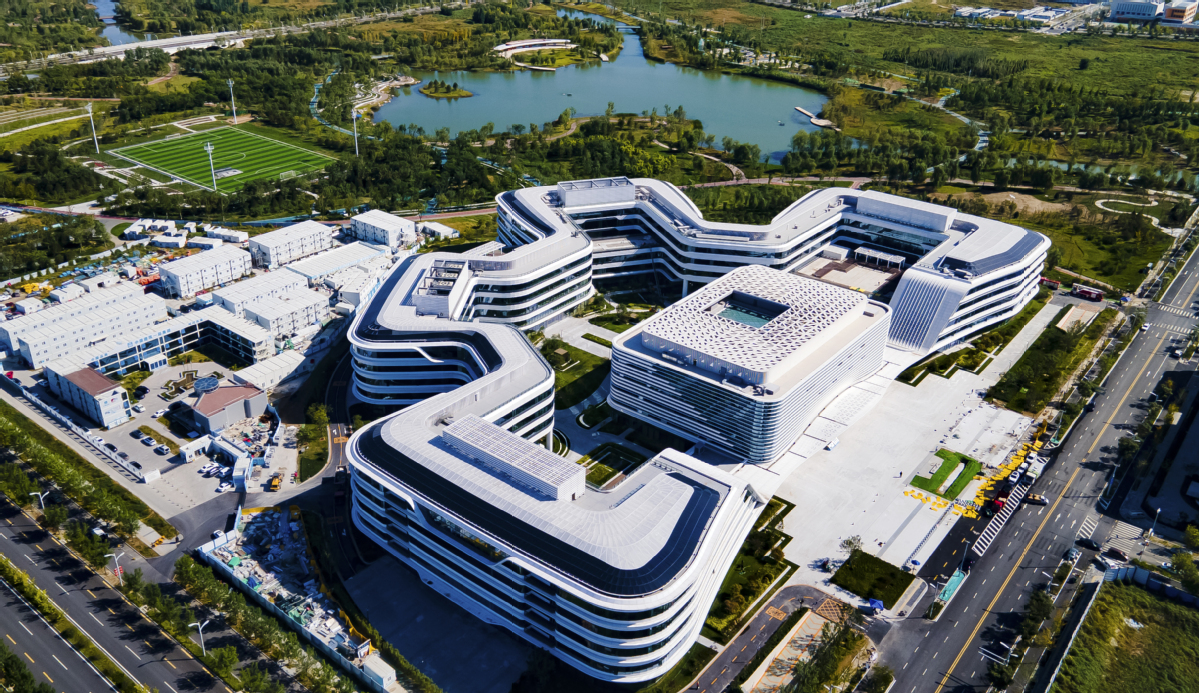
Xiong’an New Area is attracting major state-owned enterprises, signaling growing confidence in its development as a national economic hub. Sinochem, China Huaneng Group, and Beijing-Tianjin-Hebei Railway Company have all relocated their headquarters from Beijing to Xiong’an.
The moves are part of a broader government strategy to transform Xiong’an into a model city for innovation, economic growth, and sustainable urban development. Officials say the relocations will enhance the city’s business environment and strengthen its position in the national economy.
Industry analysts note that attracting large state-owned enterprises is a key step in boosting investor confidence. By relocating headquarters, these companies bring capital, talent, and business networks to the region, accelerating economic activity and infrastructure development.
Sinochem’s move is expected to expand its research, logistics, and commercial operations in Xiong’an. China Huaneng Group, a leading power generation company, aims to leverage the area’s strategic location for energy projects and regional coordination. The Beijing-Tianjin-Hebei Railway Company relocation highlights the city’s role in improving transportation and connectivity in northern China.
Government officials emphasized that these relocations align with Xiong’an’s long-term vision. The area is being developed with modern urban planning, smart infrastructure, and eco-friendly initiatives to support sustainable growth. Analysts say such factors make the city attractive for large enterprises seeking expansion outside Beijing.
The presence of these companies is expected to generate jobs, boost local consumption, and encourage supporting industries to set up operations in Xiong’an. Financial experts highlight that clustering large enterprises in the region creates synergies and strengthens regional competitiveness.
Observers note that Xiong’an’s development reflects China’s broader strategy to redistribute economic activity from the capital to nearby regions. By decentralizing key industries, the government aims to reduce congestion in Beijing while promoting balanced regional growth.
Experts also believe that these moves may encourage private enterprises and multinational companies to consider Xiong’an for future investments. The concentration of state-owned enterprises provides a foundation for business ecosystems, talent pools, and infrastructure, making the area more attractive for diverse sectors.
In addition to business relocation, Xiong’an is focusing on smart city development. Investments in technology, energy efficiency, and urban planning aim to create a sustainable urban environment, further enhancing the city’s appeal to corporations and residents.
Overall, the relocation of Sinochem, China Huaneng Group, and Beijing-Tianjin-Hebei Railway to Xiong’an New Area signals strong confidence in the city’s potential. The move reinforces Xiong’an’s role as a national economic hub, supporting job creation, infrastructure development, and long-term regional growth.
